When it comes to higher education in the United Kingdom, the term “Russell Group Universities” immediately signals prestige, research excellence, and global recognition.
For both domestic and international students, studying at a Russell Group university is often seen as a passport to world-class education, impressive alumni networks, and career opportunities that span the globe.
These universities are frequently compared to the Ivy League in the United States, but with a stronger emphasis on research impact, innovation, and government collaboration.
For international students, they are particularly attractive because of the wide variety of English-taught programs, scholarship opportunities, and diverse student communities.
This guide will break down everything you need to know about the Russell Group — from its history and members to subject strengths, tuition fees, scholarships, and comparisons with other prestigious university groups worldwide.
What is the Russell Group?
The Russell Group is an association of 24 leading research-intensive universities in the UK, formed in 1994. The name comes from the Hotel Russell in London, where the university leaders originally met.
The purpose of creating the group was to ensure that these universities had a unified voice in government discussions around higher education and research funding.
Over time, however, the Russell Group has become much more than that — it has turned into a symbol of academic quality and a benchmark for global recognition.
Key facts about the Russell Group:
- 🎓 Represents 24 universities across England, Scotland, Wales, and Northern Ireland.
- 📊 Produces over two-thirds of the UK’s world-leading research.
- 🌍 Attracts hundreds of thousands of international students each year.
- 🏆 Alumni include Nobel Prize winners, global leaders, scientists, entrepreneurs, and innovators.
- 💼 Graduates are highly sought after by employers, thanks to strong industry connections and career support.
While the Russell Group itself is not a ranking system, its members consistently appear in top positions in QS, THE, and other global rankings, reinforcing their reputation as world leaders in higher education.
All Russell Group Universities
The Russell Group consists of 24 universities across England, Scotland, Wales, and Northern Ireland. Each institution has its own unique strengths, but all share a strong commitment to world-class research, teaching, and graduate employability.
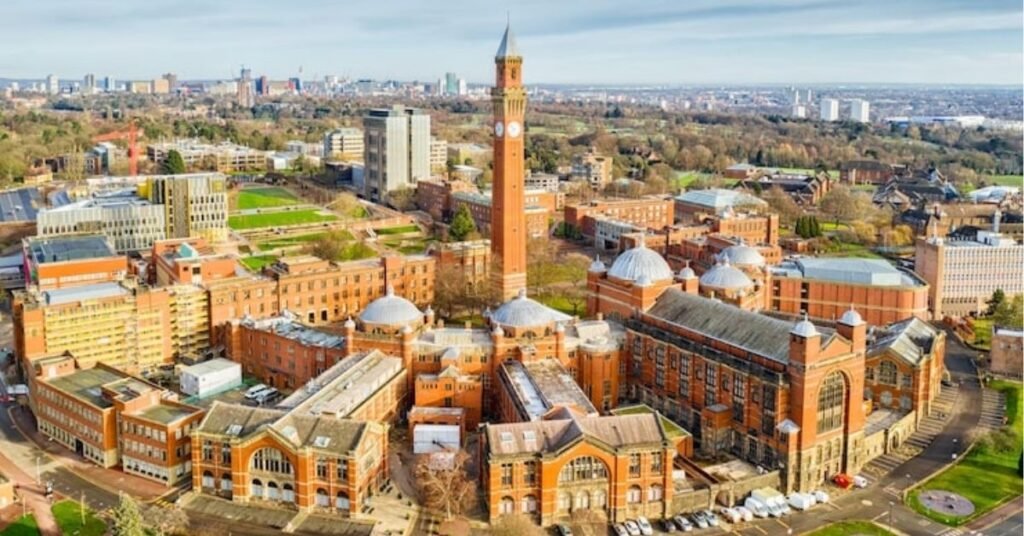
1. University of Birmingham
- Founded: 1900
- Location: Birmingham, England
- Strengths: Medical sciences, engineering, business, and social sciences. Known for strong employability support and a diverse student community.
2. University of Bristol
- Founded: 1876
- Location: Bristol, England
- Strengths: Law, engineering, life sciences, and public policy. The university is a leader in sustainability and global research impact.
3. University of Cambridge
- Founded: 1209
- Location: Cambridge, England
- Strengths: Mathematics, physics, computer science, law, and humanities. Cambridge is one of the oldest and most prestigious universities in the world, with more than 100 Nobel laureates among its affiliates.
4. Cardiff University
- Founded: 1883
- Location: Cardiff, Wales
- Strengths: Journalism, biomedical sciences, and engineering. Cardiff is the leading university in Wales and highly regarded for student satisfaction.
5. Durham University
- Founded: 1832
- Location: Durham, England
- Strengths: English literature, law, history, and archaeology. The university follows a collegiate system similar to Oxford and Cambridge.
6. University of Edinburgh
- Founded: 1582
- Location: Edinburgh, Scotland
- Strengths: Medicine, computer science, arts, and business. Regularly ranked among the top 20 universities in the world.
7. University of Exeter
- Founded: 1955 (as a university; origins date back to 19th century)
- Location: Exeter, England
- Strengths: Environmental sciences, business, and sports science. Known for its beautiful campuses and strong industry links.
8. University of Glasgow
- Founded: 1451
- Location: Glasgow, Scotland
- Strengths: Medicine, veterinary science, and engineering. One of the oldest universities in the English-speaking world.
9. Imperial College London
- Founded: 1907
- Location: London, England
- Strengths: Science, technology, engineering, medicine, and business. Ranked consistently among the top 10 universities worldwide.
10. King’s College London (KCL)
- Founded: 1829
- Location: London, England
- Strengths: Law, international relations, medicine, and social sciences. Home to one of the largest medical schools in Europe.
11. University of Leeds
- Founded: 1904
- Location: Leeds, England
- Strengths: Business, engineering, and social sciences. Known for one of the largest student populations in the UK and strong campus life.
12. University of Liverpool
- Founded: 1881
- Location: Liverpool, England
- Strengths: Health sciences, engineering, and architecture. Alumni include nine Nobel Prize winners.
13. London School of Economics and Political Science (LSE)
- Founded: 1895
- Location: London, England
- Strengths: Economics, politics, law, and social sciences. Consistently ranked among the best universities in the world for its specialist focus.
14. University of Manchester
- Founded: 1824 (as Mechanics’ Institute; university status in 2004 after merger)
- Location: Manchester, England
- Strengths: Engineering, business, humanities, and sciences. Known for major research breakthroughs including the discovery of graphene.
15. Newcastle University
- Founded: 1834 (as a School of Medicine; became university in 1963)
- Location: Newcastle upon Tyne, England
- Strengths: Medicine, dentistry, and architecture. Highly rated for student satisfaction.
16. University of Nottingham
- Founded: 1881
- Location: Nottingham, England
- Strengths: Pharmacy, engineering, and business. Has international campuses in China and Malaysia, offering a global study experience.
17. University of Oxford
- Founded: 1096 (approximate, making it the oldest in the English-speaking world)
- Location: Oxford, England
- Strengths: Humanities, sciences, law, and medicine. Regularly ranked number one globally and renowned for producing world leaders and Nobel laureates.
18. Queen Mary University of London (QMUL)
- Founded: 1887
- Location: London, England
- Strengths: Law, medicine, and engineering. Known for widening access and strong community engagement.
19. Queen’s University Belfast
- Founded: 1845
- Location: Belfast, Northern Ireland
- Strengths: Medicine, engineering, and politics. A key player in UK and EU-funded research projects.
20. University of Sheffield
- Founded: 1905
- Location: Sheffield, England
- Strengths: Engineering, architecture, and social sciences. Strong partnerships with industries and multinational companies.
21. University of Southampton
- Founded: 1952
- Location: Southampton, England
- Strengths: Oceanography, computer science, and aeronautics. Globally recognized for engineering and space research.
22. University College London (UCL)
- Founded: 1826
- Location: London, England
- Strengths: Medicine, law, architecture, humanities, and sciences. Ranked consistently among the global top 10.
23. University of Warwick
- Founded: 1965
- Location: Coventry, England
- Strengths: Business, economics, mathematics, and computer science. Warwick Business School is among the best in Europe.
24. University of York
- Founded: 1963
- Location: York, England
- Strengths: History, English, biology, and politics. Known for academic excellence combined with a scenic campus.
Best Russell Group Universities by Subject
Law
The Russell Group has some of the best law schools in the world, preparing students for both UK and international legal careers.
- University of Oxford – Globally renowned for law, especially jurisprudence and international law.
- University of Cambridge – Prestigious law faculty with centuries-old traditions.
- London School of Economics (LSE) – Specializes in commercial, corporate, and human rights law.
- University College London (UCL) – Famous for criminal law and international legal studies.
- King’s College London (KCL) – Known for strong research and one of the largest law schools in Europe.
Business & Economics
Several Russell Group universities are global leaders in business, finance, and economics.
- London School of Economics (LSE) – Among the world’s best for economics and finance.
- University of Cambridge (Judge Business School) – Renowned for entrepreneurship and management.
- University of Oxford (Said Business School) – Strong reputation for leadership and global business strategy.
- University of Warwick (Warwick Business School) – One of Europe’s top-ranked business schools.
- University of Manchester (Alliance Manchester Business School) – Well-respected for innovation and industry links.
Engineering & Technology
Engineering is one of the strongest fields across Russell Group universities.
- Imperial College London – Global leader in engineering and technology.
- University of Cambridge – Prestigious engineering department, especially in aerospace and civil engineering.
- University of Oxford – Focus on cutting-edge research in mechanical and electrical engineering.
- University of Manchester – Known for material sciences and chemical engineering.
- University of Sheffield & University of Southampton – Recognized for mechanical, aeronautical, and civil engineering.
Medicine & Life Sciences
The Russell Group produces world-class doctors, researchers, and healthcare innovators.
- University of Oxford – Prestigious medical school with strong global rankings.
- University of Cambridge – Renowned for biomedical sciences and clinical research.
- Imperial College London – Known for advanced medical research and healthcare innovation.
- University College London (UCL Medical School) – One of the largest medical schools in the UK.
- King’s College London (KCL) – Offers one of the most comprehensive medical and dental faculties.
- University of Edinburgh – Highly respected for medicine and veterinary sciences.
Mathematics & Computer Science
These universities are pioneers in mathematics, data science, and artificial intelligence.
- University of Cambridge – Legendary reputation in pure and applied mathematics.
- University of Oxford – Strong programs in computational mathematics and AI.
- Imperial College London – Known for data science and applied mathematics.
- University of Warwick – Highly respected for mathematical sciences.
- University of Manchester – Strong in computer science and big data research.
Humanities & Social Sciences
The Russell Group also excels in arts, history, and social studies.
- University of Oxford – Best for history, English, and philosophy.
- University of Cambridge – Globally renowned for literature, history, and classics.
- University of Edinburgh – Strong in humanities and arts.
- King’s College London (KCL) – Excellent in history and international relations.
- University of York – Famous for English and history programs.
Tuition Fees, Scholarships, and Financial Aid at Russell Group Universities
When considering a Russell Group university, one of the most important factors for students—especially international applicants – is cost of study. While tuition fees are significant, the availability of scholarships and financial aid makes these universities more accessible.
Tuition Fees:
For UK Students
- Most undergraduate programs charge up to £9,250 per year, which is the government cap.
- Some courses (especially medicine, dentistry, or certain postgraduate programs) may have higher costs.
- Living expenses vary depending on location. For example, London universities (UCL, LSE, KCL, Imperial) are more expensive than cities like Sheffield, York, or Cardiff.
For International Students
- Tuition fees usually range from £20,000 to £40,000 per year, depending on the subject.
- Medicine and related fields are often the most expensive (up to £50,000 per year at some universities).
- Humanities and social sciences tend to be at the lower end, while engineering and sciences are mid to high range.
Scholarships and Financial Aid:
Russell Group universities offer a wide range of scholarships, both merit-based and need-based. Below are some key opportunities:
1. Government-Sponsored Scholarships
- Chevening Scholarships – Prestigious program for international students with leadership potential. Covers tuition, travel, and living expenses.
- Commonwealth Scholarships – For students from Commonwealth countries, covering full or partial tuition plus stipends.
2. University-Specific Scholarships
Each Russell Group university has its own set of scholarships:
- Oxford & Cambridge – Full scholarships available for high-achieving international students (e.g., Gates Cambridge, Clarendon Scholarships).
- Imperial College London – Offers Presidential Scholarships for students in STEM fields.
- LSE – Provides need-based financial support for students from low-income backgrounds.
- University of Edinburgh – Edinburgh Global Scholarships for international students.
- University of Warwick – Chancellor’s International Scholarships for postgraduates.
3. Subject-Specific Awards
- Medical and engineering faculties often have separate bursaries and research funding.
- Business schools (Warwick, Oxford, Cambridge, LSE, Manchester) provide MBA scholarships for international leaders.
4. External Scholarships
Students can also apply for external scholarships, such as:
- Rhodes Scholarship (Oxford) – One of the most prestigious scholarships worldwide.
- British Council Scholarships – Available for students from specific regions.
- Fulbright Program (for US students) – Supports postgraduate study in the UK.
Living Costs:
Besides tuition, students must consider living costs, which vary by city:
- London – £1,300–£1,800 per month (highest in the UK).
- Edinburgh, Manchester, Bristol – £1,000–£1,400 per month.
- Smaller cities (Durham, York, Sheffield) – £800–£1,100 per month.
International Students and Entry Requirements at Russell Group Universities
Russell Group universities are among the most competitive institutions in the UK. Every year, they attract thousands of international applicants seeking world-class education, global recognition, and strong career opportunities.
However, because of their reputation, the entry requirements are rigorous and vary depending on the course and level of study.
General Admission Requirements
Undergraduate Entry
- Academic Qualifications
- Most universities require qualifications equivalent to A-levels or the International Baccalaureate (IB).
- Typical entry standards are:
- AAA–A*AA at A-level for highly competitive courses (medicine, law, engineering, economics).
- IB score of 36–40+ for top subjects.
- English Language Proficiency
International students from non-English-speaking countries must prove their English skills:- IELTS: 6.5–7.5 overall (depending on course).
- TOEFL iBT: 90–110.
- Some universities accept alternatives like Duolingo English Test or waive the requirement if previous education was in English.
- Additional Tests
Certain courses require specialized entrance exams:- Medicine: UCAT (University Clinical Aptitude Test) or BMAT (BioMedical Admissions Test).
- Law: LNAT (Law National Aptitude Test).
- Mathematics/Computer Science: MAT (Mathematics Admissions Test) or STEP.
- Architecture/Design: Submission of a portfolio.
- Personal Statement
A strong UCAS personal statement is crucial, demonstrating academic interest, extracurricular activities, and career motivation. - References
At least one academic recommendation letter is required, ideally from a teacher familiar with the student’s abilities.
Postgraduate Entry
- Bachelor’s Degree with high GPA or equivalent (usually 2:1 UK degree or above).
- Course-Specific Requirements:
- Business schools may require GMAT/GRE scores.
- Research-based programs may need a proposal and previous publications.
- English Language Proficiency: Same as undergraduate, though some universities have higher thresholds for research or law programs.
- Work Experience: For MBAs and certain master’s programs (e.g., Warwick Business School, Oxford Said, Cambridge Judge).
Competitiveness of Applications
- Acceptance Rates
- Oxford & Cambridge: Around 15–20% for international students.
- LSE, Imperial, UCL: Highly selective, with some courses accepting fewer than 10% of applicants.
- Other Russell Group universities (Liverpool, Sheffield, Exeter, York): Slightly higher acceptance rates (30–50%), though still competitive.
- Course Popularity
Medicine, law, economics, and engineering are consistently the most oversubscribed programs.
Support for International Students
Russell Group universities offer extensive support for international students, including:
- Pre-sessional English courses for students who need language support.
- International offices that guide on visas, accommodation, and cultural adaptation.
- Mentorship programs pairing new students with senior peers.
- Cultural societies for networking and integration.
Russell Group vs Ivy League: A Detailed Comparison
When discussing the world’s most prestigious universities, two groups often stand out: the Russell Group in the UK and the Ivy League in the US. Both are symbols of academic excellence, tradition, and strong career outcomes, but they differ significantly in history, structure, and global reach.
Origins and Purpose
- Russell Group (UK)
- Established in 1994 as a self-selected association of 24 research-intensive universities.
- Its purpose is to lobby for research funding, influence higher education policy, and promote global competitiveness.
- Named after the Hotel Russell in London, where early meetings took place.
- Ivy League (US)
- Formed in 1954 as an athletic conference of 8 universities in the northeastern US.
- While it started with sports, it evolved into a symbol of academic prestige, exclusivity, and tradition.
- Known for producing political leaders, Nobel laureates, and Fortune 500 executives.
Size and Membership
- Russell Group: 24 universities across the UK (e.g., Oxford, Cambridge, UCL, Manchester, Edinburgh).
- Ivy League: 8 elite US institutions (Harvard, Yale, Princeton, Columbia, Brown, Dartmouth, University of Pennsylvania, Cornell).
Academic Reputation
- Russell Group
- Globally recognized for research output and teaching quality.
- Oxford and Cambridge regularly compete with Harvard, Stanford, and MIT in world rankings.
- Other members like Imperial, UCL, Edinburgh, and LSE consistently rank in the world’s top 50.
- Ivy League
- Known for rigorous academics, elite faculty, and small class sizes.
- Harvard, Princeton, Yale, and Columbia are consistently ranked in the global top 10.
- Strong tradition in liberal arts, law, business, and politics.
Cost of Study
- Russell Group
- Tuition for UK/EU students: Capped at £9,250 per year.
- International students: Typically £20,000–£40,000 per year, depending on the program.
- Living costs are generally lower than in the US.
- Many public scholarships available, such as Chevening and Commonwealth Scholarships.
- Ivy League
- Tuition fees: Around $55,000–$65,000 per year (not including housing and living expenses).
- With accommodation, the total annual cost can exceed $80,000.
- Need-based financial aid is generous, but merit-based scholarships are rare.
Research and Funding
- Russell Group
- Produces two-thirds of all world-leading research in the UK.
- Strong links with UK government, NHS, and European industries.
- Ivy League
- Heavily funded through private endowments (Harvard’s endowment exceeds $50 billion).
- Enables massive investment in research, facilities, and global partnerships.
Career and Employability
- Russell Group
- Graduates are highly sought-after by employers in Europe and worldwide.
- Strong ties with UK and European industries (finance in London, tech in Cambridge, pharmaceuticals in Oxford).
- Many graduates enter global corporations, academia, and international organizations.
- Ivy League
- Graduates often dominate politics, Wall Street, Silicon Valley, and international NGOs.
- Extremely influential alumni networks.
- Considered a pathway to elite global leadership roles.
Student Experience
- Russell Group
- Larger student populations (some universities exceed 30,000+ students).
- Rich cultural diversity, with thousands of international students.
- Cities like London, Manchester, and Edinburgh offer vibrant lifestyles.
- Ivy League
- Smaller and more exclusive student bodies (usually 5,000–20,000).
- Emphasis on close professor-student interactions and personalized education.
- Campus traditions, fraternities, and strong community spirit.
Key Differences at a Glance
| Feature | Russell Group (UK) | Ivy League (US) |
|---|---|---|
| Founded | 1994 | 1954 |
| Members | 24 | 8 |
| Focus | Research & policy influence | Academic prestige & tradition |
| Tuition (Int.) | £20k–£40k | $55k–$65k |
| Financial Aid | Public & institutional scholarships | Mostly need-based |
| Student Size | Large (20k–40k+) | Smaller (5k–20k) |
| Global Ranking Leaders | Oxford, Cambridge, Imperial | Harvard, Princeton, Yale |
| Career Strength | Industry & research | Global leadership & finance |
Which Is Better for You?
- Choose Russell Group if you:
- Want a more affordable degree with strong research opportunities.
- Prefer larger, multicultural campuses.
- Are aiming to work in Europe, UK, or international research sectors.
- Choose Ivy League if you:
- Can afford higher tuition or qualify for need-based aid.
- Want an elite, smaller academic environment.
- Aim for careers in politics, finance, or leadership at the global stage.
Student Life and Employability in Russell Group Universities
Studying at a Russell Group university is about much more than academics. These universities are located in some of the UK’s most historic and vibrant cities, combining high-quality education with diverse student experiences.
At the same time, their strong links with industry and global employers make them leaders in graduate employability.
Student Life at Russell Group Universities
1. Diverse Student Communities
- Russell Group universities attract tens of thousands of international students each year.
- Cities like London, Manchester, Edinburgh, and Glasgow are cultural hubs, giving students exposure to different traditions, languages, and perspectives.
- Many universities run dedicated international student offices to help with visas, accommodation, and cultural adjustment.
2. Vibrant Campus Environments
- Campuses feature a mix of historic architecture and modern facilities. For example, Oxford and Cambridge boast centuries-old colleges, while Imperial and UCL have state-of-the-art labs.
- Sports clubs, student unions, and cultural societies create opportunities for extracurricular engagement.
- Annual festivals, career fairs, and networking events provide students with both social and professional enrichment.
3. Location Advantages
- Many Russell Group universities are based in cities with thriving industries.
- London universities (UCL, LSE, King’s College) are surrounded by finance, law, and media companies.
- Manchester and Leeds offer strong connections with business and tech sectors.
- Edinburgh and Glasgow link students with arts, politics, and science hubs.
Employability at Russell Group Universities
One of the strongest advantages of studying at a Russell Group institution is the global recognition of their degrees. Employers across industries view Russell Group graduates as highly skilled and adaptable.
1. Industry Links and Internships
- Many Russell Group universities have partnerships with multinational companies.
- For example, Imperial College London works closely with engineering and tech firms.
- Warwick Business School has ties with leading financial institutions.
- Sheffield and Southampton partner with aerospace and automotive industries.
- Internship programs, placements, and research collaborations ensure students gain real-world experience before graduating.
2. Career Services and Alumni Networks
- Dedicated career centers help students prepare CVs, practice interviews, and connect with employers.
- Alumni networks are global, with graduates working in finance, politics, healthcare, law, and academia.
- Many universities host networking events where current students can connect with successful alumni.
3. Graduate Employability Rankings
- Russell Group universities consistently appear in the top global employability rankings.
- Employers recognize their reputation for research-driven education, problem-solving skills, and innovation.
- Fields such as engineering, business, law, and medicine are especially sought after.
4. International Opportunities
- Many Russell Group universities collaborate with institutions worldwide, offering study-abroad programs and exchange schemes.
- Graduates often secure positions not only in the UK but also across Europe, North America, and Asia.
Why Russell Group Graduates Stand Out
- Critical Thinking: Research-focused teaching develops analytical skills.
- Networking: Students gain access to industry professionals and alumni networks.
- Global Recognition: A Russell Group degree is respected internationally, opening doors in multiple industries.
- Practical Skills: Many courses integrate projects, case studies, and internships, ensuring students are work-ready.
Final Takeaway
Russell Group universities are not just about academic prestige — they provide a holistic student experience and some of the strongest career prospects in the world. For both domestic and international students, they offer the perfect balance of learning, cultural immersion, and employability.
Conclusion:
Russell Group universities represent the pinnacle of higher education in the UK. With their combination of academic excellence, world-class research, and strong industry connections, they remain the top choice for ambitious students worldwide.
Here’s why they stand out:
- Prestige and Global Recognition
- Degrees from Russell Group universities are respected internationally. Whether you pursue further studies or enter the workforce, the name of your university carries significant weight.
- Unmatched Research Opportunities
- Collectively, these universities produce a large portion of the UK’s leading research. Students gain access to groundbreaking discoveries and the chance to work alongside global experts.
- Strong Career Prospects
- Russell Group graduates are among the most employable in the world. With close links to industries, internship programs, and alumni networks, students secure excellent career opportunities both in the UK and abroad.
- Diverse Student Life
- With campuses spread across vibrant cities and historic towns, students enjoy a balance of cultural immersion, extracurricular activities, and academic growth.
- Support for International Students
- From scholarships to English-taught programs, Russell Group universities are committed to welcoming students from around the globe.
Final Word:
Whether your passion lies in law, business, engineering, medicine, or the humanities, there is a Russell Group university tailored to your goals. These institutions don’t just provide education — they shape leaders, innovators, and global citizens.
For students aiming to invest in their future, choosing a Russell Group university means gaining more than a degree. It’s an opportunity to be part of a tradition of excellence, benefit from cutting-edge research, and build a career that spans the globe.
FAQs:
1. What is the Russell Group in the UK?
The Russell Group is an association of 24 research-intensive UK universities, known for academic excellence, global rankings, and strong career outcomes.
2. Are Russell Group universities better than other UK universities?
While not the only high-quality institutions, Russell Group universities are recognized for world-class research, international reputation, and excellent employability.
3. Which Russell Group university is the best for international students?
Oxford, Cambridge, UCL, and Edinburgh are highly popular with international students, offering scholarships and a wide range of English-taught programs.
4. Are Russell Group universities expensive for international students?
Yes, tuition fees range between £20,000 and £40,000 per year. However, many universities offer scholarships and funding opportunities.
5. How competitive is it to get into a Russell Group university?
Admission is highly competitive. Strong academic grades, English proficiency scores (IELTS/TOEFL), and sometimes entrance exams are required.
6. What are the benefits of studying at a Russell Group university?
Students gain access to cutting-edge research, global recognition, strong industry links, diverse student communities, and excellent job prospects.