The best vertical wind turbine depends on your local wind conditions, power needs, installation space, and budget. Vertical-axis wind turbines have a different design from traditional horizontal wind turbines, making them an option worth considering for certain residential, remote, and off-grid applications. However, not every turbine produces the same amount of electricity, and advertised wattage does not guarantee real-world performance.
In this guide, we cover three vertical wind turbine products, their key features, and the important factors to check before choosing a generator for your property.
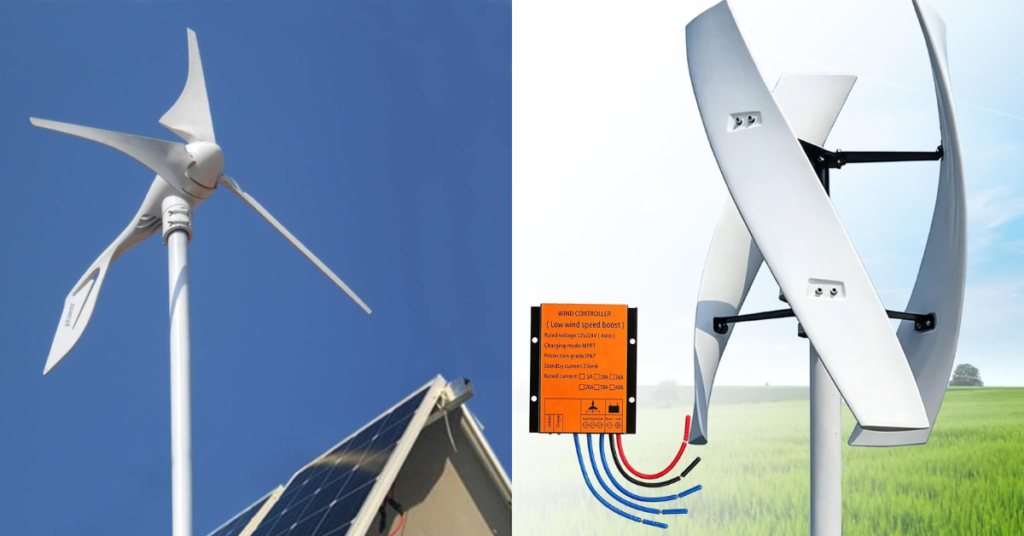
1. Pikasola 400W 24V Wind Turbine Generator — Best for Small Residential Systems

- ★ Feature: Starting with low speed; high wind energy utilization; low vibration on operation, high efficiency.
- ★ Wind Blade: 23.4inch in length, made of nylon carbon fiber. The longer the blades are, the more kinetic energy they ge…
- ★ Generator: three-phase permanent magnet synchronous motor. Efficient and compact ac generator with high performance Nd…
The Pikasola 400W wind turbine generator is an option for homeowners and off-grid users who want a small wind-powered charging system. Unlike the other two listings, this model has identifiable specifications, including a 400-watt rated output and a 24-volt system.
Its three-blade design and included charge controller make it worth considering for a small battery-based setup. However, the amount of electricity it produces depends heavily on wind speed, mounting height, and local conditions.
Key Features
- 400-watt rated output: The advertised output gives you a starting point for comparing its capacity with other small wind turbines. Actual output varies with wind conditions.
- 24V system: Designed for a compatible 24-volt electrical setup. Check battery and controller compatibility before installation.
- Three-blade rotor: The blades are listed as nylon carbon fiber, with aluminum components used in the assembly.
- Charge controller included: The package information lists a controller, turbine body, three blades, hub, screw set, and user manual.
- Low-wind starting claim: The product is advertised with a starting wind speed of 2.5 m/s, although beginning to rotate does not mean it will produce its rated power at that speed.
Best For
- Small off-grid battery-charging projects.
- Cabins, sheds, and other locations with suitable wind exposure.
- Buyers who want a 24V wind turbine with a listed controller.
Things to Consider
- The 400W rating is not a promise of continuous 400W output.
- You will need to plan for compatible batteries, wiring, mounting hardware, and any inverter required by your appliances.
- Wind turbines can create vibration and noise if mounted poorly. Use a structurally suitable mounting system and follow the manufacturer’s installation instructions.
2. DAQIANG Upgraded Vertical Wind Turbine Generator — Best for Buyers Comparing Higher-Capacity Options

- 【Vertical Axis Wind Turbine】The blade material is synthetically injection molded with high-strength FRP material. At the…
- 【Ultra-Long Service Life】Maglev generator provides lower start torque/wind speed and longer service life.Design service …
- 【Low Noise】 Drawing on the design principle of aircraft wings and the horizontal plane rotation, noise can be reduced to…
The DAQIANG upgraded vertical wind turbine listing is aimed at buyers exploring wind generation for household, business, or industrial energy applications. Its product title identifies it as a vertical turbine generator with a controller, but the precise specifications and configuration of the supplied listing should be confirmed before purchase.
This is particularly important for wind turbines because advertised wattage, operating voltage, and controller compatibility can differ between models and selectable variations. A larger number in a product title does not automatically mean greater electricity production in your location.
Key Features
- Vertical-axis design: The rotor turns around a vertical shaft, allowing it to receive wind from different directions without the same wind-facing mechanism used by many horizontal-axis turbines.
- Generator and controller configuration: The listing identifies a controller as part of the product offering. Confirm exactly which controller is included in the selected package.
- Household and industrial positioning: The listing markets the turbine for broader energy applications, but suitability depends on the verified output specifications and installation requirements.
- Configuration checks are important: Confirm the available voltage, rated power, battery compatibility, and electrical output before integrating the unit into an existing system.
Best For
Buyers researching a vertical wind turbine for a larger off-grid project who are comfortable reviewing technical specifications before purchasing.
Things to Consider
- Verify the exact rated wattage and the wind speed at which that rating is achieved.
- Ask for the rated and maximum operating voltage, cut-in wind speed, survival wind speed, and generator output details.
- Confirm whether the package includes a suitable charge controller, braking or overspeed protection, and all necessary mounting components.
- Do not assume that the product can directly power household appliances. The required battery system, inverter, and electrical protection depend on the specific configuration.
3. Vertical Wind Turbine Generator with Controller — Best for Comparing Household Wind-Power Kits

- HIGH-QUALITY BLADES: The wind generator kit blade material is synthetically injections molded with high-strength FRP mat…
- POWERFUL PERFORMANCE: Vertical Axis Wind Turbine Generator designed with three-phase AC PMG, it boasts low torque, high-…
- SPECIFICATION: Started wind speed: 2 m/s, Cut-in wind speed: 2 m/s , Rated Wind Speed: 10 m/s , Max Wind Speed: ≤45 m/s …
The third product is listed as a vertical wind turbine generator with a controller for household and industrial applications. It may be worth investigating if you are comparing alternative wind-power kits, but its exact technical specifications need to be checked against the current product listing.
For this product, the most useful comparison points are the turbine’s rated output, compatible system voltage, controller type, and the accessories supplied with the kit. These details will help you decide whether it suits a small battery-charging project or a more demanding off-grid installation.
Key Features
- Vertical turbine format: The upright rotor design can accept wind from different directions without requiring the same yaw arrangement as a conventional horizontal-axis turbine.
- Controller-listed configuration: The product title indicates a controller, but its type, capacity, and included accessories should be confirmed.
- Household and industrial marketing: The listing targets multiple applications; the actual suitability of the unit depends on its verified power output and operating conditions.
- Potential for off-grid integration: If the electrical specifications are compatible, a wind turbine may be incorporated into a suitable battery-based system with the required charging and power-conversion equipment.
Best For
Shoppers who want to compare another vertical-axis wind generator before choosing a system for a home, workshop, remote property, or off-grid project.
Things to Consider
- Check whether the advertised wattage is rated output or peak output.
- Verify whether the selected version is 12V, 24V, 48V, or another configuration instead of relying on the general product title.
- Confirm the controller’s functions, including battery charging and overspeed protection where applicable.
- Review the package contents, warranty terms, replacement-part availability, and installation requirements before committing to a purchase.
How to Choose the Right Vertical Wind Turbine
Choosing a suitable vertical-axis wind turbine requires more than comparing the wattage printed in a product title. The following factors can help you avoid buying a system that does not meet your power needs.
1. Understand Rated Power and Actual Output
Rated power is the output a turbine is designed to produce under specified conditions. It does not tell you how much electricity the turbine will generate throughout the day.
Wind speed is especially important because the energy available in the wind increases sharply as wind speed rises. A turbine rated at 400W may produce much less power when the wind is weak.
Before buying, look for a power curve or performance chart showing expected output at different wind speeds.
2. Check Your Local Wind Conditions
A vertical wind turbine will only be useful if your installation site receives enough suitable wind. Buildings, trees, walls, and other obstacles can create turbulence and reduce performance.
If possible, assess wind conditions at the planned turbine height before purchasing. A location that feels breezy at ground level may not provide enough consistent wind for useful electricity generation.
3. Choose the Correct Voltage
Small wind turbines commonly support particular battery-system voltages, such as 12V, 24V, or 48V. The correct choice depends on your battery bank, controller, and overall electrical design.
Make sure the turbine and charge controller are compatible with your batteries. If you plan to power standard household appliances, you may also need a suitable inverter.
4. Check the Charge Controller and Safety Features
A suitable controller helps manage the turbine’s electrical output and battery charging. Depending on the system, additional equipment may be needed to handle excess energy and control turbine speed during strong winds.
Before purchasing, check for:
- Battery-charging compatibility.
- Overspeed protection and an appropriate braking method.
- Protection against electrical faults and environmental exposure.
- Clear wiring diagrams and installation instructions.
Do not assume every kit includes all the components needed for a complete working system.
5. Plan a Safe Installation
Vertical-axis turbines do not need to face the wind in the same way as typical horizontal-axis turbines, but they still need adequate airflow and a strong mounting structure.
Avoid assuming that a roof is automatically a suitable location. Wind loads and vibration can affect the building structure, so use an appropriately engineered mounting arrangement and qualified installation help where necessary.
Also check local building rules, electrical requirements, and any restrictions on wind turbines.
6. Compare Total Cost and Long-Term Value
The purchase price is only one part of the cost. You may also need a tower or mounting pole, batteries, an inverter, electrical protection, wiring, and installation work.
Compare the complete system cost rather than choosing solely by advertised wattage. A smaller, well-matched turbine may be more useful for your needs than a higher-rated model that rarely receives enough wind to perform as advertised.
FAQs:
1. Are vertical wind turbines good for home use?
They can be suitable for homes with sufficient wind exposure and an appropriately designed installation. However, their actual electricity production depends on wind speed, turbine design, mounting height, and the surrounding environment.
2. Can a vertical wind turbine power a whole house?
A suitably sized wind-energy system can contribute to household electricity needs, but a small turbine should not be assumed to power an entire home. Calculate your energy consumption and compare it with the turbine’s expected output under local wind conditions.
3. What is the difference between vertical and horizontal wind turbines?
A vertical-axis turbine rotates around an upright shaft and can accept wind from different directions without a conventional yaw system. A horizontal-axis turbine typically has a horizontal rotor shaft and must be oriented toward the wind. Neither design is automatically the best choice for every location.
4. Does a 400W wind turbine produce 400 watts all the time?
No. The advertised rating applies under specified operating conditions. Actual output changes with wind speed and other factors, and electricity production may be very low when wind conditions are poor.
5. Can I connect a wind turbine directly to a battery?
Only if the turbine’s electrical output and charging equipment are designed for that battery system. A compatible charge controller and suitable electrical protection are important. Follow the manufacturer’s wiring instructions rather than connecting components based on voltage alone.
Conclusion:
The best vertical wind turbine is one that matches your wind conditions, power requirements, and electrical setup. The Pikasola 400W 24V model has identifiable specifications that make it a useful starting point for evaluating a small wind-energy project.
The DAQIANG upgraded turbine and the third vertical wind generator are also worth comparing, but verify their exact ratings, controller specifications, and included components before choosing either one.
Most importantly, look beyond advertised wattage. Reliable performance estimates, safe installation, compatible batteries, and realistic expectations about wind conditions will help you make a more informed buying decision.