The best smart glasses 2026 combine everyday eyewear with useful technology, such as hands-free photography, audio, AI assistance, and real-time language translation. However, not every model offers the same features. Some focus on premium design and connected experiences, while others prioritize affordable recording or practical tools for travel.
In this guide, we explore five smart glasses options, including Ray-Ban, HTC VIVE, and budget-friendly camera glasses. We explain their key features, potential benefits, and important limitations to help you choose the right pair for your needs.
1. Ray-Ban Meta Wayfarer Smart Glasses — Best for Premium Everyday Wear
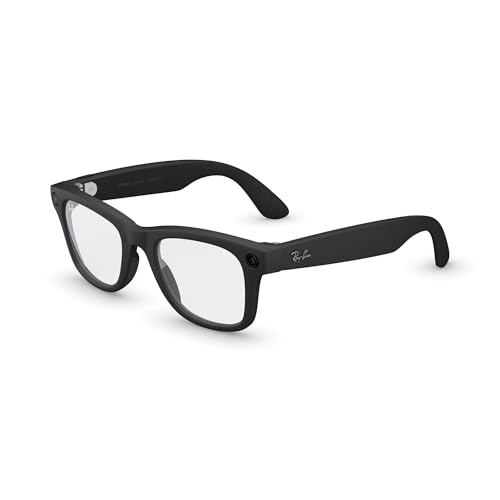
- #1 SELLING AI GLASSES* – Tap into iconic style and advanced technology with Ray-Ban Meta, the #1 selling AI glasses*. Ca…
- META AI – Get more done and stay connected without reaching for your phone with AI glasses powered by Meta AI. Capture v…
- OPEN-EAR AUDIO – Listen to music and more with discreet open-ear speakers that deliver rich, quality audio and Bluetooth…
Ray-Ban Meta Wayfarer smart glasses combine a familiar eyewear design with technology for hands-free content capture and connected use. They are worth considering if you want smart glasses that look similar to conventional sunglasses rather than a bulky electronic device.
The Wayfarer style is particularly appealing to people who care about appearance as much as functionality. Depending on the exact model and configuration, Ray-Ban Meta glasses can offer an integrated camera, open-ear audio, Bluetooth connectivity, and access to Meta AI features.
These glasses are designed around everyday convenience. You can capture moments without holding your phone and use compatible audio features while remaining aware of your surroundings.
Key Features
- Recognizable Wayfarer design: A classic frame style that suits everyday outfits and casual activities.
- Hands-free photography and video: Compatible Ray-Ban Meta models include an integrated camera for capturing photos and videos.
- Open-ear audio: Supported models feature built-in speakers for listening to audio and handling calls without conventional earbuds.
- Connected smart features: Compatible versions support smartphone connectivity and Meta AI features, although availability varies by model, country, and software version.
Best For
People who want premium-looking smart glasses for everyday wear, hands-free photography, calls, and connected features without sacrificing a conventional sunglasses appearance.
Things to Consider
- Confirm the exact generation and lens configuration before purchasing. Features and specifications differ between versions.
- Some AI functions require a compatible smartphone, a companion app, and an internet connection.
- Camera-equipped glasses raise privacy considerations. Follow local recording laws and respect other people’s privacy.
- Check the frame size carefully to ensure a comfortable fit.
2. Smart Glasses with AI and Connected Features — Best for Buyers Exploring New Technology

- 👓【𝟒𝐊 𝐔𝐋𝐓𝐑𝐀 𝐇𝐃 𝐂𝐀𝐌𝐄𝐑𝐀 𝐖𝐈𝐓𝐇 𝐄𝐈𝐒 𝐒𝐓𝐀𝐁𝐈𝐋𝐈𝐙𝐀𝐓𝐈𝐎𝐍】Capture life’s brilliant moments in crystal-clear 4K detail. Built-in 8MP se…
- 👓【𝐀𝐍𝐓𝐈-𝐁𝐋𝐔𝐄 𝐋𝐈𝐆𝐇𝐓 𝐏𝐑𝐎𝐓𝐄𝐂𝐓𝐈𝐎𝐍 𝐖𝐈𝐓𝐇 𝐈𝐍𝐂𝐋𝐔𝐃𝐄𝐃 𝐒𝐔𝐍𝐆𝐋𝐀𝐒𝐒 𝐋𝐄𝐍𝐒𝐄𝐒】Designed for modern screen-heavy lifestyles and outdoor adven…
- 👓【𝐀𝐈 𝐕𝐎𝐈𝐂𝐄 𝐀𝐒𝐒𝐈𝐒𝐓𝐀𝐍𝐓 & 𝟏𝟑𝟎+ 𝐋𝐀𝐍𝐆𝐔𝐀𝐆𝐄𝐒 𝐋𝐈𝐕𝐄 𝐓𝐑𝐀𝐍𝐒𝐋𝐀𝐓𝐈𝐎𝐍】Experience a truly hands-free wearable smart brain. Easily activa…
The second product in your selection is identified by its Amazon listing reference, but its complete product name and specifications could not be independently verified. It is therefore important to check the current listing before relying on particular features.
When comparing this pair with other smart glasses, focus on the actual capabilities offered rather than the general term “AI glasses.” Some models provide Bluetooth audio and voice assistance, while others include cameras, translation tools, or additional smartphone-connected functions.
The right choice depends on which features are genuinely available and how reliably they work with your phone.
Key Features
- Smart functionality: Verify whether the model includes voice assistance, Bluetooth audio, a camera, or other connected features.
- Smartphone compatibility: Check whether it supports your particular Android or iOS device.
- Everyday eyewear design: Review the frame shape, weight, lens type, and fit before deciding whether it suits daily wear.
- App support: Confirm that the required companion application is available in your region and supports the functions you want to use.
Best For
Shoppers who are comparing different smart glasses technologies and want to evaluate a model based on its verified specifications, phone compatibility, and price.
Things to Consider
- Do not assume the glasses support AI conversations, live translation, or video recording unless the current listing explicitly confirms these functions.
- Check the battery life for your intended activities, particularly if you plan to use audio or recording regularly.
- Look for clear warranty information and accessible customer support.
- Verify the return policy before purchasing a product with unfamiliar software or limited documentation.
3. HTC VIVE Eagle Smart Glasses — Best for AI Assistance and Travel

- Live Translation – Break through language barriers with AI-powered translation in over 90 languages with VIVE AI Pro Sub…
- Security First – Protect your personal data with enterprise-grade encryption, AI Notes are secured with AES-256 encrypti…
- Privacy By Design – VIVE Eagle’s camera features a recording indicator light and automatic camera shutoff when the glass…
HTC VIVE Eagle smart glasses are designed to combine everyday eyewear with camera, audio, and AI capabilities. They are an interesting option for shoppers who want more than basic Bluetooth sunglasses.
The glasses use a 12-megapixel ultra-wide camera for photos and video. Their integrated open-ear speakers and microphone array support hands-free audio interactions, while VIVE AI can access supported AI models, including Google Gemini and OpenAI ChatGPT.
For travelers, connected AI features and translation tools may be useful when exploring unfamiliar places or communicating across language barriers. However, actual availability depends on the software, region, phone connection, and supported services.
Key Features
- 12MP ultra-wide camera: Designed for capturing photos and video from the wearer’s point of view.
- Multiple AI options: VIVE AI supports access to Google Gemini and ChatGPT, subject to compatibility and service availability.
- Open-ear stereo speakers: Let you listen to supported audio while remaining aware of your surroundings.
- Built-in microphones: Support voice interactions and hands-free calling.
- 32GB storage: Provides onboard storage for supported content and functions.
Best For
Travelers, technology enthusiasts, and everyday users who want camera-equipped smart glasses with voice interaction and access to multiple AI services.
Things to Consider
- A compatible smartphone is required. Check the operating system requirements before purchasing.
- AI features may depend on internet access, regional availability, and the companion application.
- Battery life varies with usage. Continuous music playback and voice calls can consume power more quickly than standby use.
- Check which lens option is included and whether prescription lenses are supported for your particular configuration.
4. Plunthorn AI Smart Glasses with Camera — Best for Translation and Budget-Friendly AI Features

- 【AI Real-Time Translation & ChatGPT Assistant】AI glasses break language barriers instantly with AI real-time translation…
- 【4K Ultra HD】 Smart glasses feature 4K resolution for clear, detailed visuals, making them suitable for travel, outdoor …
- 【Bluetooth Music & Hands-Free Calls 】Smart glasses provide Bluetooth music and crystal-clear hands-free calls with an op…
Plunthorn AI smart glasses are aimed at shoppers who want several connected features in a single wearable device without necessarily paying for a premium designer frame.
The transparent-lens version associated with this product listing is marketed with camera functionality, AI assistance, real-time translation, object recognition, and open-ear audio. This combination may appeal to travelers and people who want to experiment with AI-powered eyewear.
The main attraction is the variety of advertised functions. Rather than purchasing glasses solely for recording, you can investigate whether their translation and voice features are useful for your daily activities.
Key Features
- Camera for hands-free capture: Designed to take photos and record video without holding a separate camera.
- Real-time translation: Marketed for helping users communicate across languages, subject to software and connection requirements.
- AI-assisted functions: Advertised features include object recognition and AI assistance.
- Bluetooth open-ear audio: Supports audio playback and connected functions without completely covering the ears.
- Transparent-lens appearance: Offers an alternative to traditional dark sunglasses.
Best For
Budget-conscious shoppers, travelers, and technology enthusiasts who want to explore camera-equipped glasses with translation and AI-related features.
Things to Consider
- Claims about 4K capture should be checked carefully. Advertised resolution does not necessarily establish the quality of the recorded video or still images.
- Translation accuracy depends on the software, language pair, connection, and surrounding noise.
- Confirm whether the glasses require a particular app or account to access their advertised AI functions.
- Review battery life, water-resistance documentation, storage, and return conditions before purchasing.
5. PIEPIE Camera Smart Glasses — Best for Hands-Free Outdoor Recording
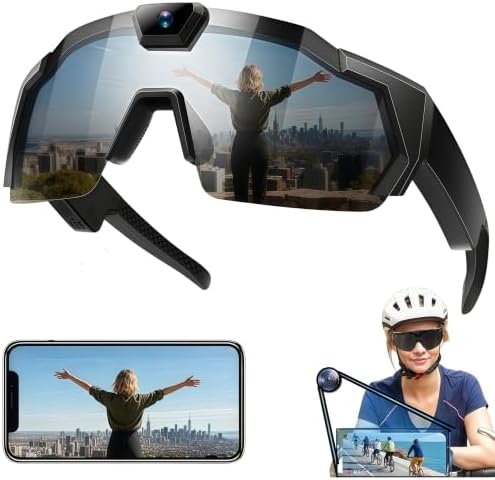
- 4K Ultra HD First-Person POV Recording Capture immersive, crystal-clear footage with our 4K camera glasses. These premiu…
- Polarized Sports Sunglasses with Camera for All Outdoor Activities Equipped with high-definition polarized UV-blocking l…
- Smart Glasses with Camera & APP Wireless Connectivity Sync these smart camera glasses to your smartphone via dedicated A…
PIEPIE camera smart glasses are designed for people who want to record activities from a first-person perspective. Instead of holding a smartphone or action camera, you can wear the glasses and capture footage while keeping your hands available for other tasks.
This style of wearable camera may be useful for outdoor hobbies, casual video creation, and documenting activities where holding a conventional camera would be inconvenient.
The listed product information identifies built-in camera functionality and 16GB of storage. It also describes smartphone compatibility and a rechargeable battery. These features make storage capacity, recording time, and transfer options important considerations when comparing this model with other camera glasses.
Key Features
- Integrated camera: Designed for hands-free, first-person photo and video capture.
- 16GB onboard storage: Provides space for recorded content, although the usable capacity and recording duration depend on file settings.
- Rechargeable battery: The listed specifications identify a 500mAh battery, but actual recording time should be confirmed against the current product documentation.
- USB connectivity: Supports wired connection for compatible data-transfer and charging functions, according to the product configuration.
Best For
People interested in hands-free recording for outdoor activities, casual vlogging, and situations where carrying a separate camera is inconvenient.
Things to Consider
- Do not assume the glasses deliver true 4K recording unless that capability is confirmed for this exact model.
- Recording time may be limited by battery capacity, video settings, and other active functions.
- Check how footage is transferred to a computer or smartphone before purchasing.
- Confirm the included accessories, charging method, and warranty details.
- Always inform people when appropriate before recording them, and follow local privacy laws.
How to Choose the Right Smart Glasses
Smart glasses come in several different categories. Understanding the differences can help you avoid paying for features you will rarely use.
1. Decide Which Features Matter Most
Start by identifying your primary reason for buying smart glasses.
- Everyday smart eyewear: Look for a comfortable frame, reliable connectivity, audio, and convenient smartphone integration.
- Hands-free recording: Prioritize camera quality, video resolution, recording duration, storage, and easy file transfer.
- AI assistance: Check which AI services are supported and whether the glasses can perform the functions you need.
- Language translation: Verify supported languages, translation methods, app requirements, and whether an internet connection is necessary.
- Outdoor activities: Consider fit, lens protection, durability, and documented water or dust resistance.
A pair with many advertised functions is not necessarily the best option if its most important feature performs poorly.
2. Check Camera Quality and Recording Options
If you plan to record videos, look beyond headline resolution.
Check the actual video resolution, frame rate, stabilization, field of view, and performance in different lighting conditions. Also determine whether the glasses can record continuously or only capture short clips.
Storage is equally important. A model with limited onboard storage may require frequent file transfers or deletion of older recordings.
3. Understand AI and Translation Requirements
AI features can make smart glasses more useful, but they do not all work in the same way.
Some glasses use voice commands to access an AI assistant. Others offer image recognition or translation through a connected smartphone application.
Before purchasing, confirm which features are included, whether any require a subscription, and whether the services work in your country. Check the supported languages if translation is a priority.
4. Evaluate Audio and Microphone Performance
Open-ear speakers allow you to listen to music, calls, or spoken responses without inserting earbuds into your ears.
However, sound may be harder to hear in busy environments. Microphone quality also matters if you intend to make calls or use voice commands outdoors.
Look for independent reviews that evaluate real-world call quality, sound leakage, and performance in noisy conditions.
5. Consider Battery Life and Charging
Battery life depends on how you use the glasses. Recording video, making calls, streaming audio, and using connected AI features can consume more power than standby operation.
Check the manufacturer’s stated battery figures and determine which activities those figures represent. If possible, look for independent testing that reflects your intended use.
Also consider charging time, charging accessories, and whether replacement charging equipment is easy to obtain.
6. Prioritize Comfort, Lenses, and Compatibility
Smart glasses should fit comfortably, particularly if you intend to wear them for several hours.
Review the frame dimensions, weight, nose support, and lens options. If you need prescription lenses, confirm compatibility for the exact model rather than assuming that every smart frame supports them.
For outdoor use, check the documented UV protection and lens specifications. Blue-light filtering, photochromic lenses, and UV protection are different features and should not be treated as interchangeable.
Finally, make sure the glasses work with your smartphone and the apps you intend to use.
7. Compare Value and Privacy
Premium smart glasses may offer more polished designs, established software ecosystems, and better-integrated features. Budget models may provide useful recording or translation functions at a lower initial cost, but their software support and long-term reliability can vary.
Compare the complete feature set rather than the price alone. Check the warranty, return policy, app reviews, and availability of customer support.
Privacy deserves equal attention. Understand when the camera or microphone is active, whether an indicator light signals recording, and how captured files or voice data are stored. Avoid recording people in private settings without appropriate permission.
FAQs:
1. What are the best smart glasses in 2026?
The best choice depends on your intended use. Ray-Ban Meta Wayfarer glasses are worth considering for premium everyday eyewear and connected features. HTC VIVE Eagle offers camera and AI capabilities, while Plunthorn’s glasses are worth investigating for translation and other advertised AI functions. For dedicated hands-free recording, consider camera-focused alternatives such as the PIEPIE model.
Always verify the exact model and current specifications before purchasing.
2. Can smart glasses take photos and record videos?
Yes, many camera-equipped smart glasses can take photos and record videos using integrated cameras. However, recording resolution, video length, storage, and battery life vary considerably between models. Some smart glasses do not have cameras at all, so check the specifications carefully.
3. Do smart glasses support real-time translation?
Some models advertise real-time translation through connected apps or AI services. The experience varies depending on the supported languages, phone compatibility, internet access, and software quality. Confirm that the languages you need are supported before buying glasses specifically for travel or communication.
4. Do smart glasses work without a smartphone?
Some functions may work independently, but many connected features require a compatible smartphone and companion app. AI assistance, translation, notifications, and content management may depend on the phone or an internet connection.
Check the requirements for your chosen model if you want to use the glasses without carrying your phone.
5. Are smart glasses worth buying?
Smart glasses can be worthwhile if their features solve a specific problem, such as capturing hands-free footage, listening to audio, or accessing an AI assistant while moving around. However, they are not automatically better than conventional glasses, earbuds, or a dedicated camera.
Choose a model based on the functions you will actually use, its comfort, battery life, compatibility, and long-term software support.
Conclusion:
The best smart glasses for 2026 depend on whether you prioritize design, hands-free recording, AI assistance, or translation. Ray-Ban Meta Wayfarer is worth considering for everyday style and connected functionality, while HTC VIVE Eagle offers a broader combination of camera, audio, and AI features. Plunthorn and PIEPIE provide alternatives for shoppers interested in translation tools or dedicated recording capabilities.
Before making your decision, verify each model’s current specifications, smartphone compatibility, battery performance, and warranty. A comfortable pair with reliable features that match your needs is a better investment than glasses with an impressive list of functions you may never use.