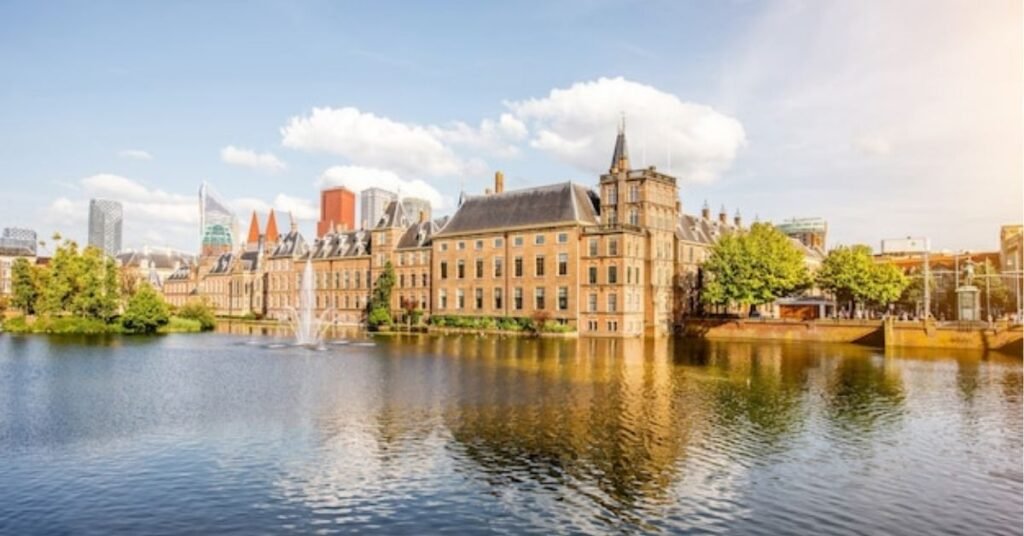
The Netherlands has become one of the most attractive higher education destinations in Europe, drawing more than 115,000 international students every year.
Known for its innovative teaching methods, high-quality research, and globally ranked universities, the Netherlands combines academic excellence with a multicultural student environment.
The Dutch education system stands out because:
- English-taught programs: Over 2,000 bachelor’s and master’s degrees are offered in English.
- Affordable tuition fees: Compared to the UK and USA, Dutch universities provide cost-effective education.
- Global recognition: Dutch degrees are internationally recognized under the Bologna Process, making it easier for graduates to work across Europe.
- Strong job market: The Netherlands is home to global companies in tech, engineering, business, and healthcare.
For students interested in engineering, medicine, agriculture, business, social sciences, and computer science, Dutch universities provide some of the world’s best programs.
Types of Universities in Netherlands
Dutch higher education institutions are divided into three main categories:
1. Research Universities (WO – Wetenschappelijk Onderwijs)
- Focus: Academic and scientific research.
- Offer: Bachelor’s, Master’s, and PhD programs.
- Examples: University of Amsterdam (UvA), Leiden University, Utrecht University, Delft University of Technology (TU Delft).
2. Universities of Applied Sciences (HBO – Hoger Beroepsonderwijs)
- Focus: Practical, hands-on education for specific careers.
- Offer: Professional bachelor’s and some master’s programs.
- Examples: Fontys University of Applied Sciences, HAN University, Saxion University.
3. Specialized Institutions
- Focus on a specific field of study such as business, arts, or agriculture.
- Examples: Wageningen University (Agriculture), Nyenrode Business University (Business), Design Academy Eindhoven (Arts & Design).
Tip for International Students: If you are looking for research careers or want to pursue a PhD, research universities are the best option. If your goal is career-focused training with internships, universities of applied sciences are ideal.
Top Universities in the Netherlands: Detailed Overview
1. Delft University of Technology (TU Delft)
- Founded: 1842
- Type: Public Research University
- Specialization: Engineering, Technology, Architecture
TU Delft is the largest and oldest Dutch public technical university. It is ranked among the top 20 engineering universities in the world. With a strong focus on innovation, design, and technology, TU Delft attracts thousands of international students.
Popular Programs:
- Civil Engineering
- Mechanical Engineering
- Architecture & Urban Planning
- Aerospace Engineering
- Computer Science
Why Choose TU Delft?
- Consistently ranked in the top 10 globally for architecture and civil engineering.
- Strong collaboration with industries such as Shell, Philips, and Airbus.
- Campus in Delft is considered one of the most advanced in Europe, with state-of-the-art labs and research centers.
2. University of Amsterdam (UvA)
- Founded: 1632
- Type: Public Research University
- Specialization: Humanities, Social Sciences, Economics, Law
The University of Amsterdam (UvA) is the largest university in the Netherlands, with more than 35,000 students. It is one of Europe’s leading research universities, ranked among the top 60 worldwide.
Popular Programs:
- Psychology (UvA is in the top 10 globally for psychology)
- Economics and Business
- Communication Science
- Law
- Artificial Intelligence
Why Choose UvA?
- Located in the heart of Amsterdam, giving students exposure to a multicultural environment.
- Known for world-class research and publications.
- UvA offers one of the largest selections of English-taught programs in Europe.
3. Leiden University
- Founded: 1575 (oldest university in the Netherlands)
- Type: Public Research University
- Specialization: Law, Medicine, Political Science, Humanities
Leiden University is one of the most prestigious universities in Europe, known for producing Nobel laureates and world leaders. It is closely associated with research and global politics.
Popular Programs:
- International Law
- Political Science & International Relations
- Medicine & Biomedical Sciences
- Archaeology
- Asian & Middle Eastern Studies
Why Choose Leiden?
- Ranked consistently among the top 100 universities worldwide.
- Strong ties with The Hague, the international city of peace and justice.
- Offers one of the largest selections of humanities and social sciences programs in English.
4. Utrecht University
- Founded: 1636
- Type: Public Research University
- Specialization: Life Sciences, Natural Sciences, Humanities
Utrecht University is internationally recognized for research and sustainability. With more than 30,000 students, it is one of the top-ranked Dutch universities.
Popular Programs:
- Biology and Environmental Sciences
- Medicine & Veterinary Sciences
- Education & Social Sciences
- Philosophy and Religious Studies
Why Choose Utrecht?
- Ranked among the top 50 worldwide for life sciences and sustainability research.
- Home to several leading research institutes in climate studies and innovation.
- Strong focus on interdisciplinary teaching and problem-based learning.
5. Eindhoven University of Technology (TU/e)
- Founded: 1956
- Type: Public Technical University
- Specialization: Technology, Innovation, Engineering
Eindhoven University of Technology (TU/e) is a technology-driven university located in the Dutch city of Eindhoven, often called the Silicon Valley of Europe.
Popular Programs:
- Electrical Engineering
- Computer Science & Artificial Intelligence
- Industrial Design
- Data Science
- Applied Physics
Why Choose TU/e?
- Located in Eindhoven, home to Philips, ASML, and several tech startups.
- Strong emphasis on innovation, entrepreneurship, and collaboration with industries.
- Known for small class sizes and personalized teaching methods.
6. Wageningen University & Research (WUR)
- Founded: 1918
- Type: Public Research University
- Specialization: Agriculture, Environmental Studies, Food Science
Wageningen University & Research is ranked #1 in the world for Agriculture and Forestry. It is globally recognized for tackling pressing issues like climate change, food security, and sustainability.
Popular Programs:
- Food Technology
- Plant Sciences
- Environmental Sciences
- Animal Sciences
- Biotechnology
Why Choose WUR?
- Globally ranked among the top 5 universities in life sciences.
- Strong international community – more than 40% of students are from abroad.
- Collaborations with the UN, WHO, and multinational food companies.
7. Erasmus University Rotterdam (EUR)
- Founded: 1913
- Type: Public Research University
- Specialization: Business, Economics, Social Sciences
Erasmus University is one of Europe’s best for business and economics. Its Rotterdam School of Management (RSM) is consistently ranked among the top 10 business schools in Europe.
Popular Programs:
- International Business Administration
- Economics & Econometrics
- Public Health & Medical Sciences
- Media and Communication
Why Choose EUR?
- Home to one of the largest medical centers in Europe (Erasmus MC).
- Strong ties with global corporations and industries in Rotterdam.
- Over 70 English-taught programs at both bachelor’s and master’s levels.
8. Vrije Universiteit Amsterdam (VU Amsterdam)
- Founded: 1880
- Type: Public Research University
- Specialization: Social Sciences, Economics, Psychology, Health Sciences
VU Amsterdam is known for its multidisciplinary approach and welcoming atmosphere for international students.
Popular Programs:
- Psychology
- Business Administration
- Law & Governance
- Health Sciences
- Philosophy & Religion
Why Choose VU?
- Located in Amsterdam’s business and finance district (Zuidas).
- Strong research output in psychology and health sciences.
- Affordable tuition for non-EU students compared to other European capitals.
9. Maastricht University (UM)
- Founded: 1976
- Type: Public Research University
- Specialization: International Law, Liberal Arts, Business, Medicine
Maastricht University is unique for its Problem-Based Learning (PBL) method, which emphasizes small group learning, critical thinking, and research. Nearly 50% of its students are international.
Popular Programs:
- International Business
- European Law
- Liberal Arts & Sciences
- Public Health
- Data Science
Why Choose UM?
- One of the most international universities in Europe.
- Located in a border region, offering strong links with Germany and Belgium.
- PBL system prepares students for real-world problem solving.
10. Radboud University
- Founded: 1923
- Type: Public Research University
- Specialization: Psychology, Law, Medical Sciences
Located in Nijmegen, Radboud is highly regarded for its research in psychology and neuroscience.
Popular Programs:
- Clinical Psychology
- International & European Law
- Political Science
- Philosophy & Theology
Why Choose Radboud?
- Ranked among the top 150 universities worldwide.
- Strong focus on student-centered learning.
- Research collaborations in medical sciences and neuroscience.
11. University of Groningen
- Founded: 1614
- Type: Public Research University
- Specialization: Science, Arts, Social Sciences
One of the oldest universities in the Netherlands, Groningen is popular for its research excellence and student life.
Popular Programs:
- Astronomy
- International Business
- Law & International Relations
- Artificial Intelligence
Why Choose Groningen?
- Ranked in the top 100 worldwide.
- Large international student population.
- Beautiful historic city with vibrant student culture.
12. Tilburg University
- Founded: 1927
- Type: Public Research University
- Specialization: Economics, Business, Law, Social Sciences
Tilburg University is small but highly respected, especially for business and law.
Popular Programs:
- Economics & Business
- Law & International Law
- Data Science
- Theology
Why Choose Tilburg?
- Known for social sciences and humanities.
- Affordable tuition compared to larger universities.
- Collaborative partnerships with Erasmus University and Eindhoven TU.
Universities of Applied Sciences in the Netherlands
Unlike research universities, these institutions provide career-oriented education, combining theory with practical internships.
1. HAN University of Applied Sciences
- Strong in engineering, business, and social sciences.
- Offers English-taught programs in automotive engineering, international business, and communication.
2. Saxion University of Applied Sciences
- Known for creative programs like hospitality, fashion, and international business.
- Locations in Enschede, Deventer, and Apeldoorn.
3. Fontys University of Applied Sciences
- One of the largest applied sciences universities.
- Programs in engineering, ICT, arts, and healthcare.
4. Avans University of Applied Sciences
- Offers innovative programs in business, engineering, and environmental sciences.
- Ranked among the top applied sciences universities in the Netherlands.
5. The Hague University of Applied Sciences
- Located in The Hague, city of peace and justice.
- Popular among international students for politics, law, and business programs.
6. Amsterdam University of Applied Sciences (HvA)
- Focus on media, arts, education, and urban studies.
- Located in the cultural capital of Amsterdam.
Why International Students Choose the Netherlands
The Netherlands has become a hotspot for international students, and here’s why:
- English-Taught Degrees: Over 2,000+ programs in English.
- Affordable Tuition Fees: €6,000 – €15,000 per year (cheaper than UK/USA).
- Post-Study Opportunities: Students can stay for 1 year after graduation to find work.
- Global Job Market Access: Dutch degrees are EU-recognized, opening career opportunities worldwide.
- Multicultural Environment: 1 in 5 students is international.
- Quality of Life: Safe cities, strong transport, and high student satisfaction.
Best Universities in Netherlands by Subject
The Netherlands offers diverse programs across different disciplines. Here’s a breakdown of the top universities for each field:
1. Best Universities for Engineering & Technology
- Delft University of Technology (TU Delft) – Ranked among the top 15 in the world for engineering. Strong in civil, mechanical, and aerospace engineering.
- Eindhoven University of Technology (TU/e) – Specializes in electrical engineering, robotics, and data-driven technology.
- University of Twente – Combines engineering with social sciences to develop solutions for modern challenges.
2. Best Universities for Computer Science & IT
- University of Amsterdam (UvA): Offers world-class AI and data science programs.
- Delft University of Technology (TU Delft): Strong in software engineering, AI, and robotics.
- Eindhoven University of Technology (TU/e): Focuses on AI, machine learning, and computing systems.
3. Best Universities for Business & Economics
- Erasmus University Rotterdam (EUR): Home to Rotterdam School of Management, one of the best in Europe.
- University of Amsterdam (UvA): Strong in business analytics, finance, and economics.
- Tilburg University: Respected for economics, law, and international business.
4. Best Universities for Medicine & Health Sciences
- Leiden University Medical Center (LUMC): Leading in biomedical sciences and medical research.
- University of Groningen (UMCG): Strong in medicine, dentistry, and pharmacy.
- Erasmus University Rotterdam (Erasmus MC): One of Europe’s largest medical centers, top in public health.
5. Best Universities for Psychology
- Vrije Universiteit Amsterdam (VU Amsterdam): Leading in psychology, neuroscience, and behavioral sciences.
- University of Amsterdam (UvA): Offers strong clinical and social psychology programs.
- Radboud University: Known for cognitive neuroscience and experimental psychology.
6. Best Universities for Agriculture & Life Sciences
- Wageningen University & Research (WUR): Ranked #1 in the world for agriculture and environmental sciences.
- Utrecht University: Strong in veterinary medicine and life sciences.
- Radboud University: Offers research in biology and ecosystems.
7. Best Universities for Law & Political Science
- Leiden University: Oldest and most prestigious law school in the Netherlands.
- Tilburg University: Specializes in international law and human rights.
- Maastricht University: Strong in European law and international relations.
8. Best Universities for Arts, Humanities & Social Sciences
- University of Amsterdam (UvA): Famous for humanities, communication, and cultural studies.
- Leiden University: Strong in philosophy, history, and political science.
- Utrecht University: Respected for education and social sciences.
Cheapest Universities in the Netherlands for International Students
While Dutch universities are generally affordable compared to the UK or USA, some institutions are particularly budget-friendly:
- HAN University of Applied Sciences – Offers practical programs at lower tuition rates.
- Saxion University of Applied Sciences – Affordable for business and creative programs.
- The Hague University of Applied Sciences – Popular for politics and law with reasonable fees.
- Fontys University of Applied Sciences – Large applied sciences institution with affordable tuition.
- Avans University of Applied Sciences – Known for low costs and strong career opportunities.
💡 Average Tuition Fees for International Students:
- EU/EEA students: €2,400 – €4,000 per year.
- Non-EU students: €6,000 – €15,000 per year (still lower than many Western countries).
Admission Process for International Students
The Dutch admission system is transparent and student-friendly. Here’s a step-by-step guide:
Step 1: Choose a University and Program
- Research universities and select a program that matches your goals.
- Check whether it is offered in English (over 2,000+ English-taught programs available).
Step 2: Application Portal – Studielink
- All applications are made via Studielink, the national portal for Dutch higher education.
Step 3: Admission Requirements
- Bachelor’s programs: High school diploma equivalent to Dutch VWO.
- Master’s programs: Bachelor’s degree in a relevant field.
- English proficiency: IELTS (6.0–7.0), TOEFL (80–100), or Cambridge English.
Step 4: Submit Application
- Documents required: Academic transcripts, motivation letter, recommendation letters, CV.
- Application deadlines: January – May (for September intake).
Step 5: Receive Offer Letter
- Universities send conditional or unconditional offers.
Step 6: Apply for Visa & Residence Permit
- MVV (long-term visa) is required for non-EU students.
- Universities usually assist with visa applications.
Scholarships and Financial Aid in the Netherlands
Studying abroad can be costly, but the Netherlands offers several scholarship opportunities for international students:
1. Holland Scholarship
- Funded by the Dutch Ministry of Education.
- €5,000 grant for non-EU/EEA students.
- Available at most research universities and applied sciences institutions.
2. Erasmus+ Program
- For exchange students from EU countries.
- Covers tuition and living expenses for a semester/year abroad.
3. Orange Tulip Scholarship (OTS)
- Specifically for students from certain countries (including Pakistan, India, Indonesia, etc.).
- Covers partial or full tuition fees.
4. University-Specific Scholarships
- Leiden Excellence Scholarship
- UvA Merit Scholarship (University of Amsterdam)
- TU Delft Excellence Scholarships
- Erasmus University Holland Scholarship
- Maastricht University High Potential Scholarship
5. Grants & Financial Aid
- Some Dutch universities offer need-based financial support.
- Part-time jobs (allowed up to 16 hours per week) can also help students manage expenses.
Living in the Netherlands as an International Student
Studying in the Netherlands goes beyond academics—it’s about experiencing Dutch culture, lifestyle, and opportunities. The country is known for its safe environment, multicultural population, and excellent student support services.
Cost of Living in the Netherlands
The average monthly cost for international students ranges between €800 – €1,200, depending on the city and lifestyle.
Breakdown of Expenses (per month):
- Accommodation: €350 – €600 (student dorms are cheaper than private rentals)
- Food & groceries: €200 – €350
- Transportation: €40 – €100 (cycling is the cheapest option)
- Books & study materials: €30 – €60
- Health insurance: €100 – €120
- Personal expenses: €100 – €200
💡 Tip: Cities like Amsterdam, Rotterdam, and Utrecht are more expensive, while Tilburg, Groningen, and Eindhoven are relatively affordable.
Accommodation Options for Students
Finding housing can be competitive, especially in major cities. Students usually choose from:
- University Housing: Some universities provide limited dormitories for first-year students.
- Shared Apartments (Student Houses): Shared with other students, usually €350–€500/month.
- Private Rentals: More expensive (€600+), but more privacy.
- Homestays: Living with Dutch families, offering cultural exchange.
💡 Popular Platforms: DUWO, Kamernet, SSH, and university housing offices.
Transportation in the Netherlands
The Netherlands is famous for being a cycling nation—most students use a bicycle as their primary transport. Other options include:
- OV-chipkaart: Rechargeable card for trains, buses, and trams.
- Student Discounts: Many universities offer transportation discounts for students.
Part-Time Jobs for Students in the Netherlands
International students are allowed to work part-time while studying, but the rules depend on nationality:
- EU/EEA students: Can work without restriction.
- Non-EU students: Can work up to 16 hours per week during the academic year or full-time in summer (June–August).
Popular Part-Time Jobs:
- Cafes, restaurants, and retail shops
- Delivery services (Uber Eats, Thuisbezorgd)
- Tutoring or research assistant jobs at universities
- Internships in tech, business, or creative fields
💡 Average Student Salary: €8 – €12 per hour.
Career Opportunities After Graduation
The Netherlands offers strong career opportunities for international graduates, thanks to its innovative industries and international companies.
Key Industries Hiring Graduates:
- Technology & Engineering (Philips, ASML, NXP Semiconductors)
- Finance & Business (ING, ABN AMRO, Shell)
- Agriculture & Food Sciences (Unilever, FrieslandCampina, Wageningen-based companies)
- IT & Data Science (Booking.com, Adyen, tech startups in Amsterdam & Eindhoven)
- Healthcare & Life Sciences (Erasmus MC, Leiden Medical Center, biotech firms)
Orientation Year Visa (Zoekjaar Visa)
- After graduation, non-EU students can apply for a one-year residence permit to find a job or start a business.
- During this year, they can work without restrictions.
Top FAQs:
Here are the most common questions international students ask about Dutch universities:
1. Are Dutch universities good for international students?
Yes, the Netherlands is home to world-class universities offering 2,000+ English-taught programs.
2. What language do I need to study in the Netherlands?
Most programs for international students are in English, but learning basic Dutch helps with daily life.
3. Is studying in the Netherlands expensive?
Compared to the UK or USA, the Netherlands is more affordable. Tuition for non-EU students is €6,000 – €15,000/year.
4. Can I work while studying?
Yes. EU students can work freely, while non-EU students can work 16 hours/week.
5. What is the best university in the Netherlands?
TU Delft, University of Amsterdam, Leiden University, Erasmus University Rotterdam, and Wageningen University are among the best.
6. Which university is best for engineering?
TU Delft and Eindhoven University of Technology.
7. Which university is best for medicine?
Leiden University Medical Center (LUMC), Erasmus MC, and Groningen University Medical Center.
8. Which university is best for business?
Erasmus University Rotterdam (Rotterdam School of Management).
9. Which university is best for agriculture?
Wageningen University & Research (WUR) – ranked #1 globally.
10. Do Dutch universities require IELTS/TOEFL?
Yes, most universities require IELTS 6.0–7.0 or TOEFL 80–100.
11. Can I study in the Netherlands without IELTS?
Some universities accept previous English-medium education certificates instead of IELTS.
12. How do I apply to Dutch universities?
Through Studielink, the national online portal.
13. What are the application deadlines?
Most deadlines are between January–May for a September intake.
14. Are there scholarships for international students?
Yes. Holland Scholarship, Erasmus+, Orange Tulip Scholarship, and university scholarships are available.
15. Is accommodation provided by universities?
Some universities offer limited housing, but most students find private rentals.
16. Is health insurance mandatory?
Yes. International students must have valid health insurance in the Netherlands.
17. Can I stay in the Netherlands after graduation?
Yes. You can apply for the Orientation Year Visa to find a job.
18. What is the average salary after studying in the Netherlands?
Starting salaries range from €2,000 – €3,500/month, depending on the field.
19. Is the Netherlands safe for students?
Yes. It’s one of the safest countries in Europe with a high quality of life.
20. Do Dutch universities have high acceptance rates?
Most Dutch universities are accessible and merit-based, though top programs are competitive.
Conclusion:
The Netherlands has successfully built a reputation as one of Europe’s most attractive destinations for higher education, combining academic excellence, innovative teaching methods, affordable tuition fees, and strong industry connections.
From world-class research universities like TU Delft, University of Amsterdam, Leiden University, Utrecht University, and Wageningen University & Research, to universities of applied sciences that focus on practical learning, students have a wide range of academic pathways to choose from.
For international students, the Netherlands is especially appealing because:
- Over 2,000 programs are taught in English, making education accessible.
- Tuition fees are lower than in the UK and USA, with many scholarship options.
- The country offers a safe, multicultural environment with students from over 150 nationalities.
- Strong career prospects exist after graduation, supported by the Orientation Year Visa, which allows international graduates to stay and work in the Netherlands.
Whether your interest lies in engineering, agriculture, business, computer science, psychology, or health sciences, Dutch universities provide globally recognized degrees that open doors to international careers.
Beyond academics, students in the Netherlands enjoy a vibrant lifestyle, affordable living (compared to Western Europe), efficient transport, and the unique cultural experience of living in one of the most innovative and forward-thinking nations in the world.
👉 In short, studying in the Netherlands is not just about earning a degree—it’s about gaining world-class education, building a global career, and experiencing a multicultural life in one of the most progressive countries in Europe.