Choosing the best security camera system for home 2026 means finding the right balance of video quality, recording options, night vision, installation requirements, and long-term costs. Some homeowners prefer wired systems with a dedicated recorder for continuous surveillance, while others want wireless cameras with solar power and simpler installation.
This guide covers five home security camera systems from Reolink, ANNKE, AOSU, GMK, and Hiseeu. Each offers a different approach to monitoring your property, helping you compare traditional wired CCTV systems with wireless alternatives and choose one that suits your home’s layout and security needs.
1. Reolink RLK16-800D8 — Best for 4K Wired Home Security

- Stunning True 4K Ultra HD Clarity – Capture every detail with 8MP (3840×2160) resolution—four times the clarity of 1080p…
- Person/Vehicle Detection – Smart PoE IP cameras can identify people and vehicles in terms of their shapes, minimizing un…
- Plug and Play PoE System – A simple PoE connection makes it easier to set-up and install your home security camera syste…
The Reolink RLK16-800D8 is a wired security camera system designed for homeowners who want detailed footage and centralized recording. It combines eight 4K PoE cameras with a network video recorder (NVR), making it suitable for monitoring multiple areas around a house, garage, driveway, or other property.
Its main advantage is the combination of high-resolution video, a dedicated recording system, and support for continuous recording. Rather than relying on individual battery-powered cameras, the system uses Ethernet cables to connect the cameras to the recorder and provide power.
Key Features
- 4K Ultra HD video: The included cameras capture video at 3840 × 2160 resolution, providing more detail than standard 1080p cameras.
- 16-channel NVR: The recorder has 16 dedicated PoE camera ports, allowing room to expand beyond the eight included cameras. The system also supports select additional compatible cameras.
- 4TB preinstalled hard drive: Local storage allows footage to be recorded without depending entirely on a cloud subscription. Storage can be expanded to a maximum of 16TB using compatible internal drives.
- Person, vehicle, and animal detection: Smart detection helps distinguish relevant movement from other activity, potentially reducing unnecessary notifications.
- Night vision up to 100 feet: Infrared night vision supports monitoring after dark.
- Power over Ethernet: Each wired camera receives power and network connectivity through an Ethernet cable, reducing the need for separate power connections.
Best For
Homeowners who want detailed 4K footage, centralized local recording, and the ability to expand their surveillance system. It is particularly suitable for larger homes, properties with multiple outdoor areas, and people who prefer a wired setup over battery-powered cameras.
Things to Consider
- Installing the cameras requires running Ethernet cables between the cameras and the recorder, so planning the cable routes is important.
- The system is more involved to install than a typical wireless camera kit.
- The cameras depend on the NVR and their wired connections, so this is not a fully wireless solution.
- Although local recording avoids mandatory cloud storage fees for core recording, the system still needs electricity and proper installation.
2. AOSU Solar-Powered Wireless Security Camera System — Best for Cable-Free Installation

- One Unified Security System, Powered by 1st-Gen aosuBase: 32GB of local storage comes ready to use, holding about 120 da…
- Multi-Cam Live View for All-at-Once Monitoring: Watch up to four live camera feeds simultaneously in the aosu app and mo…
- 360° Coverage with Pan, Tilt, and Smart Auto Tracking: Pan and tilt to see all around your property. When activity is de…
AOSU’s four-camera wireless security system is designed for homeowners who want outdoor surveillance without running Ethernet cables to every camera. The supplied listing identifies a solar-powered system with four cameras, a home base, 2K-class video, and local storage.
Its main appeal is convenience. Solar power can reduce the need to remove cameras for charging, while wireless connectivity offers greater flexibility when choosing mounting locations. The system also includes features intended to help homeowners monitor activity across multiple areas.
Key Features
- Solar-powered cameras: Integrated solar panels help maintain battery charge when the cameras receive sufficient sunlight.
- 2K-class video: The listed cameras provide approximately 3MP resolution, offering more detail than standard 1080p video.
- 360-degree pan and tilt: Supported camera movement helps monitor a wider area than a fixed-position camera.
- Automatic motion tracking: Compatible tracking features can follow detected movement within the camera’s viewing range.
- 32GB local storage: The listed home base provides local storage, with no mandatory monthly subscription for the core recording features.
- Color night vision: The system supports color night viewing when its lighting and environmental conditions allow it.
Best For
Homeowners who want flexible outdoor camera placement, solar-assisted power, and local recording without installing a wired CCTV system. It may be particularly useful for monitoring gardens, patios, driveways, and entrances where running cables would be inconvenient.
Things to Consider
- Solar charging performance depends on sunlight, weather, camera activity, and mounting position. Shaded locations may require more attention to battery levels.
- Wireless cameras still need a reliable Wi-Fi connection and sufficient signal strength.
- Local storage is limited compared with the large hard drives available in some NVR systems.
- Pan-and-tilt movement can help follow activity, but it does not mean every part of your property is continuously visible at once.
- Verify the exact storage retention, app features, and camera compatibility before purchasing.
3. GMK Wireless Security Camera System — Best for Flexible Outdoor Monitoring

- 【2K Ultra HD & Full Color Night Vision – 4 Cam Kit】Upgrade your home security with this 4 pack security cameras wireless…
- 【Wire-Free Battery Powered & Easy 3-Minute Setup】Experience a truly wireless security system with no messy cables. This …
- 【Smart AI PIR Motion Detection & Instant Mobile Alerts】 Never miss a moment with smart PIR motion detection and AI cloud…
The GMK wireless security camera system is an option to investigate if you want outdoor surveillance without installing a traditional wired CCTV setup. The supplied listing identifies a wireless security camera product with motion detection and weather-resistant design features.
Wireless cameras can simplify installation because they do not require the same camera-to-recorder cabling as a PoE system. However, the exact power source, recording method, and camera specifications are important when deciding whether a particular kit will suit your home.
Key Features
- Wireless connectivity: A wireless setup can provide greater flexibility when choosing camera positions, depending on the system’s connection requirements.
- Motion detection: Motion-triggered alerts can help notify you when activity occurs within a monitored area.
- Outdoor-oriented design: The listing describes the cameras as waterproof, making the exact weather-resistance rating worth checking before outdoor installation.
- Mobile monitoring: Confirm the supported app and remote-viewing features to determine how easily you can monitor your property away from home.
- Recording options: Check whether the specific package supports a memory card, dedicated recorder, local storage, cloud storage, or a combination of these options.
Best For
Homeowners comparing wireless cameras for entrances, garages, backyards, and other areas where installing traditional security camera wiring may be inconvenient.
Things to Consider
- The exact GMK package specifications need to be checked before confirming its resolution, night vision range, battery life, or included storage.
- Wireless connectivity does not necessarily mean battery-powered operation. Confirm whether the cameras require charging, solar power, or a permanent electrical connection.
- Check whether the cameras need an internet connection for live viewing, recording, or alerts.
- Verify the weather-resistance rating rather than relying solely on a general waterproof claim.
- Compare the total number of included cameras and the cost of any additional storage or accessories.
4. Hiseeu Wireless Security Camera System — Best for Multi-Camera Property Coverage

- Local & Remote Control】 The home security camera system support local view & control, no need WiFi, true play & plug. Fo…
- 【Corded Powered, 24/7 Recording】 Hiseeu security camera system, 24/7 wired plug-in powered of cameras and NVR support 24…
- 【3TB Storage, No Monthly Fee】 Security camera system pre-installed in 3TB hard drive, massive local storage (no cloud fe…
Hiseeu offers wireless security camera systems designed for homeowners who want to monitor multiple areas of a property. The supplied listing identifies a multi-camera system with an expandable 16-channel NVR and 5MP cameras.
This type of setup occupies a useful middle ground between traditional wired CCTV and individual battery-powered cameras. The cameras communicate wirelessly with the recording system, while the NVR provides a central location for viewing and managing footage.
Key Features
- 5MP camera resolution: The listed cameras capture higher-resolution footage than standard 1080p cameras, providing additional detail for general surveillance.
- Expandable 16-channel NVR: The listed configuration includes a recorder designed to support multiple cameras, offering room for a larger surveillance setup.
- Wireless camera connectivity: Wireless connections can reduce the need to run data cables from every camera to the recorder.
- Night vision: The listed system supports night monitoring, with the exact viewing range and color-night-vision capabilities depending on the included camera configuration.
- Motion and human detection: Supported detection features can help identify activity and reduce unnecessary notifications.
- Local recording: A dedicated NVR can provide centralized footage storage. Confirm the supplied hard drive capacity and recording settings for the exact package.
Best For
Homeowners who want to monitor several areas around a larger property and prefer a centralized recording system without running Ethernet cables to every camera.
Things to Consider
- Wireless cameras may still require individual power connections. Check the supplied kit to determine whether its cameras are battery-powered or electrically powered.
- The wireless connection between the cameras and NVR must remain reliable throughout your property.
- Confirm the number of cameras included in the package. Hiseeu sells different configurations, and the channel capacity does not necessarily indicate how many cameras come in the box.
- Check the included hard drive capacity, recording resolution, and supported camera expansion before purchasing.
- Wireless installation can be simpler than running Ethernet cables, but mounting multiple cameras and positioning the recorder still requires planning.
5. ANNKE 8-Channel Security Camera System — Best for Traditional CCTV Surveillance
Amazon Link: https://www.amazon.com/ANNKE-Detection-Surveillance-IP67-Rated-Recording/dp/B00L3W2QJ2/
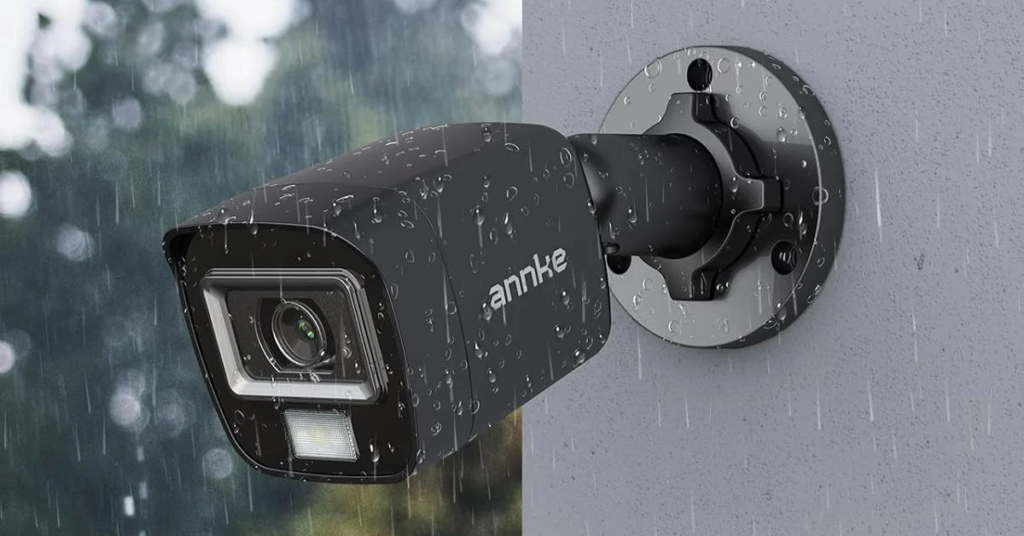
The ANNKE security camera system is a wired surveillance option for homeowners who prefer a conventional CCTV setup with multiple cameras connected to a central DVR. The supplied product listing identifies an eight-channel system with 1080p video and infrared night vision.
Unlike a wireless camera kit, a wired DVR system is designed around fixed camera positions and a central recording unit. This arrangement can be useful when you want cameras monitoring entrances, driveways, garages, and other important areas without relying on a separate Wi-Fi connection for each camera.
Key Features
- 1080p Full HD video: The listed camera resolution is suitable for general home monitoring, including observing entrances and outdoor spaces.
- Eight-channel DVR: The system is designed to manage multiple cameras through one recording unit, with available channels depending on the included configuration.
- Infrared night vision: The listed system supports night vision up to approximately 100 feet under suitable conditions.
- Wired camera connections: Fixed connections provide an alternative to battery-powered cameras that need periodic charging.
- Centralized recording: Footage can be managed through the DVR, subject to the supplied hard drive and recording configuration.
Best For
Homeowners who want a traditional wired CCTV system for everyday property monitoring and prefer managing several cameras from a central recorder.
Things to Consider
- Check the included equipment carefully: Older and newer ANNKE packages can have different camera counts, DVR models, and storage configurations.
- Confirm whether a hard drive is included and how much recording storage it provides.
- The listed 1080p resolution is lower than the 4K resolution of the Reolink system, which may matter if you need to inspect fine details.
- Wired installation requires planning for camera cables and power connections.
- Check the exact recording resolution supported by the DVR, because camera resolution and recorder capabilities are not always identical.
How to Choose the Right Security Camera System for Home
The right home security camera system depends on your property’s size, the areas you want to monitor, and how you prefer to store recordings. Consider these factors before making your decision.
1. Wired vs. Wireless Security Cameras
Wired systems are worth considering if you want a permanent installation and reliable connections between cameras and a central recorder. Power over Ethernet systems, such as the Reolink kit, can carry both power and data through one cable.
Traditional DVR systems, such as the ANNKE option, also use wired connections but may require different cabling depending on the package.
Wireless systems offer more flexibility when positioning cameras. AOSU uses solar-assisted cameras, while wireless NVR kits such as Hiseeu can reduce the need for data cables running to every camera.
Remember that wireless does not always mean wire-free. Some cameras still need electrical power, and wireless signals must reach the recording unit reliably.
2. Choose the Right Video Resolution
Resolution affects how much detail a camera captures, but it is only one part of image quality.
- 1080p Full HD: Suitable for general monitoring of entrances, gardens, and driveways.
- 2K-class video: Offers additional detail over 1080p and can be a practical middle ground.
- 4K Ultra HD: Provides more pixels for inspecting details, especially when monitoring larger outdoor areas.
Higher resolution also uses more storage and may require more network bandwidth. Camera placement, lighting, lens quality, and viewing angle remain important.
3. Consider Night Vision Performance
Outdoor security cameras need to capture useful footage after dark.
Infrared night vision generally produces black-and-white footage, while color night vision uses available light or built-in illumination to capture color images.
Check the manufacturer’s stated night vision range, but remember that actual performance depends on lighting, weather, obstacles, and the scene being monitored.
If your driveway or backyard is poorly lit, look for a system that suits those conditions rather than choosing based on resolution alone.
4. Decide How You Want to Store Recordings
Storage is one of the most important differences between security camera systems.
NVR and DVR systems can record footage to an internal hard drive. Depending on the model, they may support continuous recording, scheduled recording, or motion-triggered recording.
Wireless systems may use a home base, built-in storage, memory cards, or cloud services.
Before purchasing, consider:
- How many days of footage you want to retain.
- Whether you need continuous recording or motion-triggered clips.
- Whether storage can be expanded.
- Whether remote viewing requires a subscription.
- What happens to recording if your internet connection goes down.
Local recording can reduce recurring cloud storage costs, but the equipment still needs power and suitable storage capacity.
5. Check Smart Detection Features
Motion detection can alert you to activity, but basic systems may also trigger notifications from animals, moving branches, headlights, or other environmental changes.
Person and vehicle detection can help make alerts more useful. Some systems also offer animal detection or automatic tracking.
Look for adjustable motion zones and notification settings so you can concentrate on important areas, such as entrances and driveways.
Do not assume every feature is included with every package from the same brand. Confirm the exact model’s capabilities.
6. Evaluate Weather Resistance
Outdoor cameras need to withstand the conditions in which they will be installed.
Check the camera’s IP rating, which indicates its level of protection against dust and water under specified test conditions. Also consider the manufacturer’s operating temperature range.
Mount cameras where they have a clear view without exposing cables, connectors, or power adapters unnecessarily to moisture.
7. Plan Your Camera Coverage
Before buying a system, identify the areas you want to monitor.
Common locations include:
- Front and back entrances.
- Driveways and garages.
- Side passages and gates.
- Backyards, patios, and garden entrances.
- Detached garages or other outbuildings.
A larger camera count does not automatically provide better coverage. Camera angles, mounting height, lighting, and overlapping fields of view all affect what the system can capture.
8. Compare Long-Term Costs
The purchase price is only part of the total cost of a security system.
Include potential expenses for additional cameras, hard drives, cables, mounting equipment, electrical work, and cloud subscriptions.
A wired system may require more installation effort but can provide centralized continuous recording. A solar-powered wireless system may reduce cabling and charging requirements, but its performance depends on sunlight, battery capacity, and network coverage.
Choose the setup that meets your security requirements without adding features you do not need.
FAQs
1. What is the best security camera system for home in 2026?
The best choice depends on your priorities. Reolink is worth considering for 4K video and expandable wired recording, ANNKE for traditional CCTV surveillance, and AOSU for solar-powered wireless cameras. GMK and Hiseeu are additional options to investigate when comparing wireless installations and multi-camera coverage.
2. Is a wired or wireless security camera system better?
Wired systems are often a good fit for permanent installations and continuous recording, while wireless systems offer more flexibility in camera placement. The better option depends on your property, installation requirements, power availability, and recording preferences.
3. Do home security cameras work without the internet?
Some systems can continue recording locally without an internet connection, provided their recorder, cameras, and storage are operating correctly. However, remote viewing, cloud storage, and some notifications may require internet access. Check the manufacturer’s specifications for offline recording support.
4. Is 4K better than 1080p for security cameras?
4K provides substantially more image detail than 1080p, which can help when reviewing distant objects or cropping footage. However, 4K footage also requires more storage and bandwidth. For general monitoring, 1080p may be sufficient when cameras are positioned appropriately.
5. Do security camera systems require a monthly subscription?
Not always. Systems that record to a local DVR, NVR, or home base can often provide core recording features without a monthly cloud subscription. Some advanced features or optional cloud services may cost extra, so check the exact package before buying.
Conclusion
Choosing the best security camera system for home in 2026 starts with understanding how you want to monitor your property and store footage. Reolink stands out for its 4K wired setup and expandable NVR, while ANNKE is worth considering for traditional CCTV surveillance. AOSU offers a solar-powered wireless approach, and GMK and Hiseeu provide additional options for shoppers comparing wireless camera installations.
Before deciding, compare resolution, night vision, recording capacity, power requirements, smart detection, and long-term costs. The right system is one that covers your important areas reliably and provides the recording features you need without unnecessary complexity.