Finding the best coffee machines for latte at home depends on how much control, convenience, and customization you want. Some machines grind beans and prepare milk drinks automatically, while others give you more hands-on control over espresso extraction and milk texture.
The five models below cover several popular approaches, from fully automatic bean-to-cup machines to traditional semi-automatic espresso makers and a capsule-compatible option.
We focus on the features that matter most for making lattes, including milk frothing, grinder setup, ease of use, drink customization, cleaning, and countertop space.
1. De’Longhi Magnifica Duo Fully Automatic Espresso Machine

- Discover a menu of 20 preset hot & iced drink recipes including espresso, drip coffee, iced lattes, cold brew, and more …
- 3 brewing technologies for authentic espresso, drip coffee, and cold brew unlock 20 recipes with the ideal brewing for e…
- Instantly froth dairy milk or plant-based alternatives into velvety smooth hot or cold foam with the included LatteCrema…
The De’Longhi Magnifica Duo is designed for people who want a wide range of coffee drinks without manually handling a portafilter for every cup. It works from whole beans, grinding and dosing coffee automatically before brewing. Its standout feature is the combination of hot and cold milk preparation, making it useful if you enjoy both traditional hot lattes and iced coffee drinks.
The machine offers 20 preset hot and iced recipes, along with adjustable drink settings. Its LatteCrema Hot & Cool system automatically prepares milk foam for different drinks, so the workflow is much simpler than with a traditional steam wand.
Key Features
- Fully automatic bean-to-cup brewing
- 20 preset hot and iced drink recipes
- Built-in grinder for freshly ground coffee
- LatteCrema Hot & Cool milk system
- Automatic milk texturing for hot and cold drinks
- 2.4-inch digital display
- Multiple drink sizes, intensity levels, and temperature options
- Automatic cleaning features and dishwasher-safe parts
Best For
This machine is a strong fit for latte drinkers who prioritize convenience and variety. It is especially useful for households where people enjoy different drinks, including hot lattes, cappuccinos, iced lattes, and cold-brew-style beverages.
Things to Consider
The Magnifica Duo is a larger investment than basic semi-automatic machines. Its extensive automatic features also mean that you are giving up some of the hands-on control that traditional espresso enthusiasts may prefer. Its larger countertop footprint is worth checking before purchase.
2. Breville Barista Express Espresso Machine BES870XL
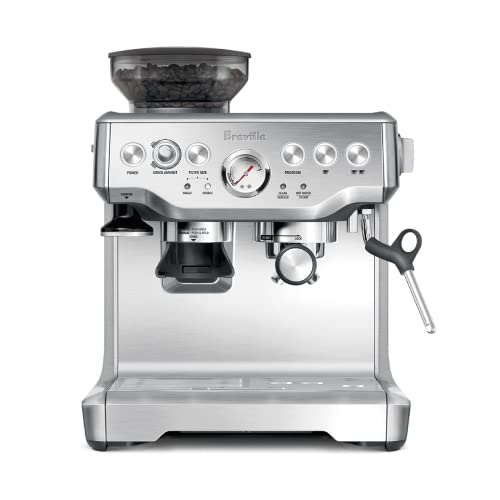
- MANUAL HAND-TEXTURED MICROFOAM: The powerful steam wand on this cappuccino maker and latte machine is designed to quickl…
- PRECISE DOSE GRINDING: Integrated precision conical burr grinder on bean-to-cup espresso machine grinds on demand to del…
- WATER PRESSURE: Low pressure pre-infusion gradually increases pressure at the start and draws out all the flavors evenly…
The Breville Barista Express takes a very different approach. Instead of preparing a latte almost entirely automatically, it gives you control over the espresso-making process. It combines an espresso machine with a built-in conical burr grinder, allowing you to grind beans directly before extraction.
Its manual steam wand is particularly important for latte lovers who want to learn how to texture milk themselves. You can control the milk frothing process rather than relying on an automatic milk system. The machine also uses digital temperature control to help maintain appropriate brewing conditions.
Key Features
- Built-in conical burr grinder
- Grind-size adjustment for dialing in espresso
- Dose-control grinding directly into the portafilter
- Digital temperature control
- Low-pressure pre-infusion
- 15-bar Italian pump
- Manual steam wand for microfoam milk
- Stainless-steel 54mm portafilter
- Hot-water outlet for other coffee drinks
Best For
The Barista Express is best for home coffee drinkers who want more control over their latte-making process. It suits people who enjoy adjusting grind size, tamping espresso, and manually steaming milk.
Things to Consider
This is not a one-touch latte machine. You need to grind the beans, prepare the portafilter, extract the espresso, and steam the milk yourself. That creates a learning curve, but it also gives you much more control over the final drink. It also requires more hands-on cleaning than a fully automatic machine.
3. Philips 3300 Series Fully Automatic Espresso Machine with LatteGo

- 6 PRESETS, ENDLESS COMBINATIONS: Choose from espresso, coffee, iced coffee, cappuccino, latte macchiato or simply hot wa…
- YOUR COFFEE IN ONE TOUCH, TAILORED TO YOU: Automatically grinds, tamps and brews at the push of a button with our intuit…
- LATTEGO PROPRIETARY MILK SYSTEM: Frothed. Foamed. Your milk, your way, automatically. LatteGo is the fastest to clean mi…
The Philips 3300 Series with LatteGo focuses heavily on easy operation. It is a fully automatic bean-to-cup machine that can prepare several drinks from the touch of a button. For latte drinkers, the LatteGo milk system is the main attraction because it handles milk frothing automatically rather than requiring you to learn how to use a steam wand.
The machine offers six beverage options, including espresso, regular coffee, cappuccino, latte macchiato, iced coffee, and hot water. You can also adjust drink settings such as coffee strength, volume, and milk level.
Key Features
- Fully automatic bean-to-cup brewing
- Built-in ceramic grinder
- LatteGo automatic milk-frothing system
- Six beverage options
- Adjustable coffee strength and drink volume
- Adjustable milk level
- Full-color touch display
- SilentBrew technology
- Removable LatteGo milk system with simple cleaning
Best For
The Philips 3300 is well suited to busy latte drinkers who want fresh-ground coffee with minimal manual work. It is also a good choice if easy milk-system cleaning is an important part of your decision.
Things to Consider
The Philips gives you less manual control than the Breville Barista Express. If you enjoy experimenting with tamping, espresso extraction, and hand-textured milk, a semi-automatic machine may be more satisfying. You also need to keep the grinder, brewing system, water system, and milk components maintained.
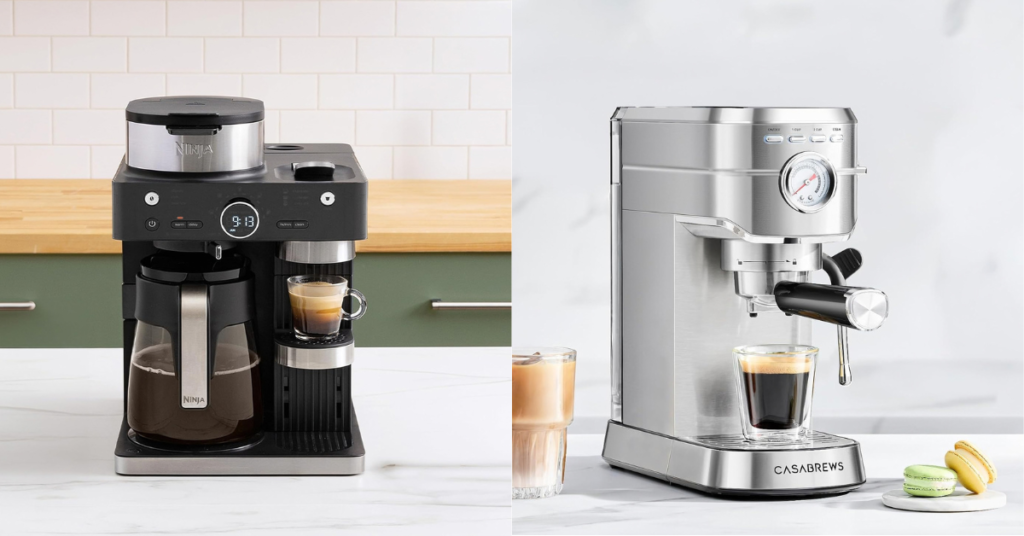
4. Ninja Espresso & Coffee Barista System CFN601

- BARISTA PLUS TECHNOLOGY: The 19-bar pressure system delivers ultra-flavorful espresso with a silky-smooth crema by brewi…
- COFFEEHOUSE DRINKS AT HOME: The built-in, fold-away frother allows you to create espresso-based cappuccinos, lattes, fla…
- BREW SINGLE-SERVE ESPRESSO: Choose your favorite espresso capsule and brew up to 3 styles: Espresso (1.35 oz), Lungo (3….
The Ninja CFN601 stands out because it combines several brewing styles in one machine. It can make espresso from compatible original-style capsules while also brewing regular coffee from grounds. That makes it different from the bean-to-cup machines above, which are primarily designed around whole-bean brewing.
For latte drinkers, the built-in fold-away frother allows you to prepare milk for cappuccinos, lattes, and flat whites. The espresso side offers three capsule brew styles: Espresso, Lungo, and Over Ice. On the coffee side, you can brew from a single serving up to a 12-cup carafe.
Key Features
- 19-bar pressure system
- Compatible with original-style espresso capsules
- Espresso, Lungo, and Over Ice capsule options
- Built-in fold-away milk frother
- Brews coffee grounds as well as espresso capsules
- Nine coffee brew sizes
- Up to a 12-cup glass carafe
- Removable water reservoir
- Used-capsule storage bin
Best For
The Ninja CFN601 is a practical choice for households that want both espresso-based drinks and regular brewed coffee. It can be particularly useful when different people in the home prefer different types of coffee.
Things to Consider
This machine does not have the same bean-to-cup workflow as the De’Longhi or Philips models. Espresso is designed around compatible capsules, while regular coffee uses grounds. If your main priority is freshly grinding whole beans for every latte, one of the built-in-grinder machines may be a better fit.
5. CASABREWS CM5418 20-Bar Espresso Machine

- Make Your Favorite Espresso Coffee At Home: The CASABREWS coffee machine with milk frother allows you to prepare all you…
- Professional 20 Bar Pressure System: Semi-Automatic 2-in-1 Espresso Maker, with 20 bar professional Italian pump and 135…
- Milk Frothing System: Our espresso machine with milk frother has a powerful steam wand, so you can texture creamy, rich …
The CASABREWS CM5418 is a compact semi-automatic espresso machine aimed at home users who want to make espresso drinks without spending as much as some premium all-in-one machines. It uses a manual brewing workflow and includes a steam wand for frothing milk.
For latte preparation, its main advantage is the combination of a pressure gauge, adjustable shot volume, and manual steam wand. These features let you learn and adjust the espresso and milk process instead of relying on automatic drink presets.
Key Features
- 20-bar Italian pressure pump
- Built-in pressure gauge
- PID temperature control
- Low-pressure pre-infusion
- Manual stainless-steel steam wand
- 51mm portafilter
- Single and double shot options
- Adjustable brew volume
- 34-ounce removable water tank
- Compact countertop design
Best For
The CM5418 is best for budget-conscious beginners who want to learn traditional espresso and latte preparation. Its smaller design can also make sense for kitchens where countertop space is limited.
Things to Consider
This machine does not include a built-in coffee grinder, so whole-bean users need a separate grinder. It also requires manual espresso preparation and milk steaming. The 20-bar pump rating should not be viewed by itself as a guarantee of better espresso; grind size, dose, tamping, temperature, and extraction technique also affect the result.
How to Choose the Right Coffee Machine for Latte at Home
Choosing the right machine becomes easier when you first decide how you want to make your latte. The biggest difference between these models is not simply pressure or the number of buttons. It is the amount of work you want to do yourself.
Type of Machine
Fully automatic machines such as the De’Longhi Magnifica Duo and Philips 3300 are designed for convenience. They grind, dose, brew, and handle milk preparation with much less manual work.
Semi-automatic machines such as the Breville Barista Express and CASABREWS CM5418 give you more control. You prepare the espresso yourself and manually steam the milk. This takes more practice but can be rewarding if you want to develop barista skills.
The Ninja CFN601 takes another route by combining espresso capsules with regular coffee brewing.
Built-In Grinder
A built-in grinder can make your morning routine simpler because you can keep whole beans inside the machine and grind them immediately before brewing.
The De’Longhi, Philips, and Breville models in this guide include integrated grinding systems. The CASABREWS CM5418 does not, so you would need pre-ground espresso or a separate grinder.
If you already own a quality grinder, a semi-automatic machine without an integrated grinder may still make sense.
Milk Frothing
Milk preparation is especially important when choosing a latte machine.
Automatic systems such as De’Longhi’s LatteCrema Hot & Cool and Philips’ LatteGo are convenient because the machine handles the milk-frothing process.
A manual steam wand, like those on the Breville and CASABREWS, requires more technique but gives you greater control over milk texture.
The Ninja uses a built-in fold-away frother, offering a simpler approach for milk-based drinks.
Ease of Use
If you want to press a button and receive a prepared milk drink, look toward a fully automatic model.
If you enjoy the process of grinding, tamping, extracting, and steaming, the Breville Barista Express provides much more hands-on control.
For beginners, it is worth deciding whether you want to learn espresso preparation or simply make lattes quickly. Neither approach is automatically better; they suit different users.
Espresso Control and Customization
Manual machines generally offer more direct control over the brewing process. Grind size, coffee dose, tamping, and milk texture can all affect your finished latte.
Automatic machines trade some of that control for consistency and convenience. They are often easier for users who do not want to spend time learning espresso techniques.
Cleaning and Maintenance
Every espresso machine needs regular care. Milk systems need particular attention because leftover milk should not be allowed to sit in the components.
Automatic machines may have automatic rinsing and cleaning programs, but that does not mean they are maintenance-free.
With manual machines, you should clean the portafilter and group area regularly and purge and wipe the steam wand after steaming milk. Descaling and water-system maintenance are also important according to the manufacturer’s instructions.
Size and Counter Space
Measure your available counter space before buying. Espresso machines can be deeper and taller than they appear in product photos, and you need enough room to access the water tank, bean hopper, milk container, or portafilter.
The CASABREWS CM5418 is designed around a relatively compact footprint, while larger automatic machines such as the De’Longhi Magnifica Duo need more space.
Budget
A higher price does not automatically mean a better latte for every person. More expensive machines often add convenience, automation, drink variety, or better control rather than simply making a fundamentally different beverage.
If convenience is your priority, spending more on automation can make sense. If you want to learn espresso and milk steaming, a semi-automatic machine may give you more value from its manual controls.
FAQs:
What is the best type of coffee machine for making lattes at home?
A fully automatic machine is usually the easiest option because it can handle espresso and milk preparation with minimal manual work. A semi-automatic machine is better if you want more control over extraction and milk texture.
Is a built-in grinder important for a latte machine?
A built-in grinder is useful because it lets you grind whole beans immediately before brewing without needing another appliance. However, it is not essential if you already have a separate quality grinder or prefer pre-ground espresso.
Are automatic coffee machines good for lattes?
Yes. Machines such as the De’Longhi Magnifica Duo and Philips 3300 are specifically designed to prepare milk-based coffee drinks automatically. They are particularly useful for people who value convenience.
Is the Breville Barista Express good for beginners?
It can be, especially for beginners who want to learn traditional espresso preparation. However, it has a larger learning curve than a fully automatic machine because you need to grind, dose, tamp, extract, and steam milk manually.
Do I need a separate grinder with the CASABREWS CM5418?
Yes, if you want to use whole coffee beans. The CM5418 is a semi-automatic espresso machine without an integrated grinder, so you can either use pre-ground espresso or pair it with a separate grinder.
Conclusion:
The best coffee machine for latte at home depends on the kind of coffee routine you prefer. The De’Longhi Magnifica Duo and Philips 3300 focus on automatic bean-to-cup convenience and milk preparation.
The Breville Barista Express is better suited to shoppers who want hands-on espresso and milk control. The Ninja CFN601 offers flexibility for both espresso capsules and regular coffee, while the CASABREWS CM5418 provides a more compact and budget-focused manual approach.
Before choosing, focus on the features you will actually use: automatic versus manual preparation, grinder setup, milk frothing, cleaning, customization, and available counter space. Choosing based on your daily routine will usually matter more than simply choosing the machine with the biggest pressure number.