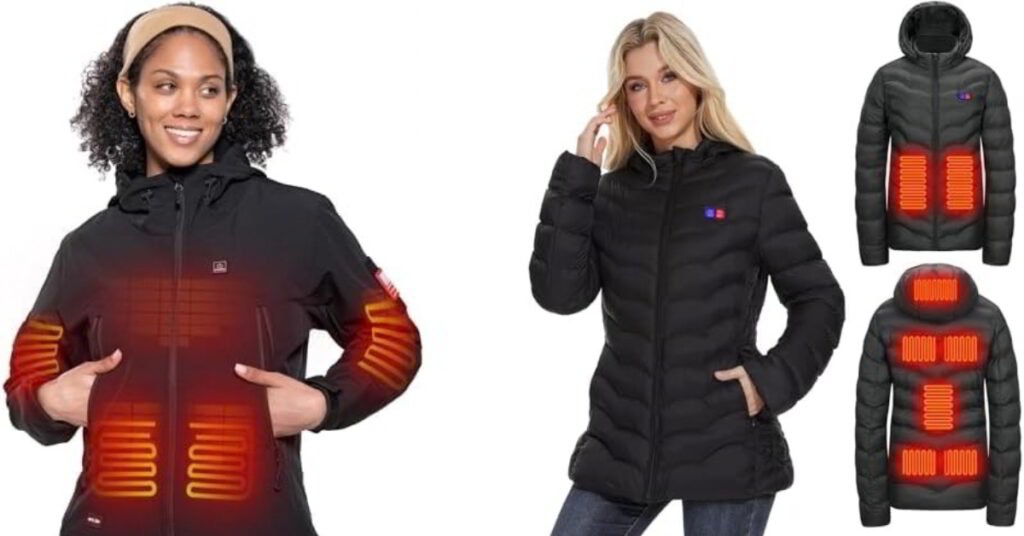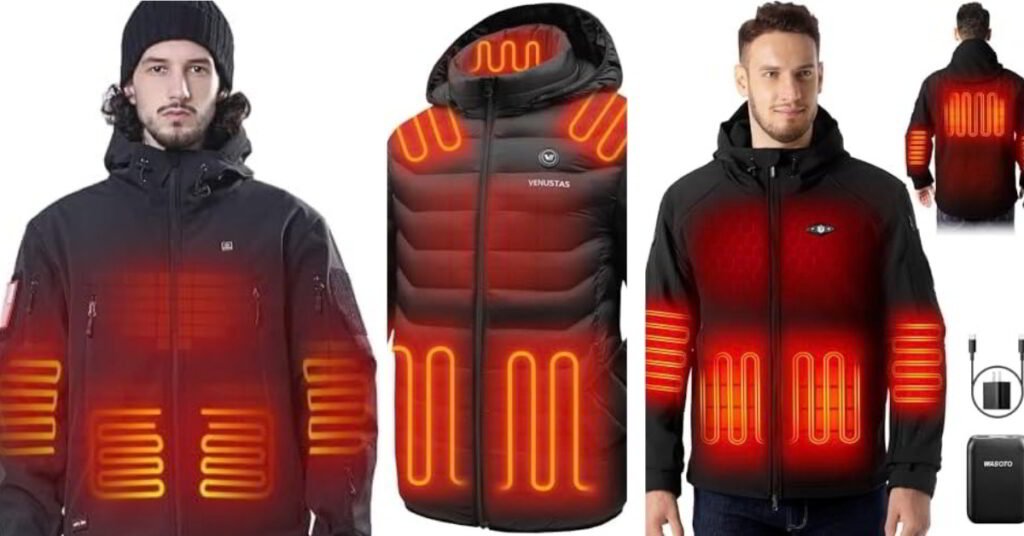
Working outdoors in cold weather can make construction, maintenance, warehouse, landscaping, and other jobs uncomfortable. The best heated jackets for working outdoors combine battery-powered warmth with practical features such as durable materials, useful pockets, adjustable heat settings, and protection against wind or light moisture.
However, not every heated jacket is designed for the same working conditions. Some focus on everyday warmth, while others emphasize visibility or wider heating coverage. This guide covers five options to help you compare their features, understand important trade-offs, and choose a jacket that suits your work environment.
1. Heated Jacket — Best Starting Point for Comparing Workwear Options
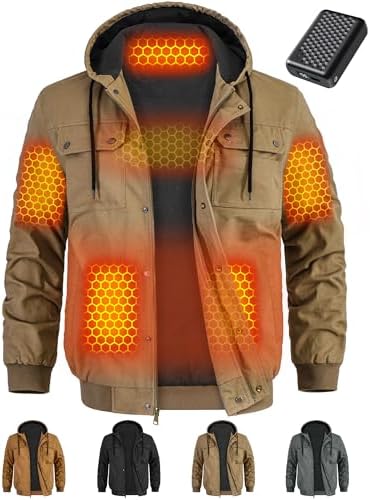
The first jacket is the product supplied in the initial Amazon listing. Its exact brand name, heating specifications, and included accessories could not be independently verified, so it is important to check the current product label before treating it as a particular type of work jacket.
When evaluating this option, focus on whether its heating system, battery capacity, and outer material are suitable for the length and conditions of your outdoor shifts.
Key Features
- Battery-powered heating: Confirm the heating system, number of heating zones, and available heat settings on the current listing.
- Battery inclusion: Check whether a rechargeable battery and charger are included or sold separately.
- Work-friendly construction: Review the shell material, stitching, closures, and pocket layout for your intended tasks.
- Size and fit options: Check the size chart and allow enough room for comfortable movement and appropriate base layers.
Best For
Shoppers who want to investigate this particular listing and compare its battery system, construction, and total purchase cost with more clearly specified alternatives.
Things to Consider
- Confirm the exact model and brand before comparing specifications.
- Check battery runtime at each heat setting rather than relying on a single maximum-runtime claim.
- Do not assume the jacket is waterproof, flame-resistant, or safety-certified unless the manufacturer provides clear evidence.
- For demanding work, verify that the jacket allows unrestricted movement when bending, lifting, and reaching.
2. DEWBU Heated Jacket — Best for Regular Outdoor Work

The DEWBU heated jacket is worth considering if you need a dedicated heated outer layer for cold-weather work. DEWBU offers battery-powered jackets designed around adjustable warmth and practical outdoor use.
Its appeal is the combination of powered heating and conventional jacket coverage. Instead of relying only on thick insulation, a heated jacket lets you adjust the amount of additional warmth according to the conditions and your activity level.
Key Features
- Battery-powered heating: The jacket uses a dedicated battery system to operate its heating elements. Check the exact battery voltage and capacity for this model.
- Adjustable warmth: Verify the available heat levels so you can select a comfortable setting as temperatures and activity change.
- Outdoor-oriented shell: Check the model’s wind resistance and water resistance before using it in exposed or wet work environments.
- Everyday workwear design: Consider the pocket arrangement, sleeve fit, and freedom of movement when carrying tools or completing physical tasks.
Best For
Outdoor workers who want a heated jacket for recurring cold-weather use, including maintenance, property work, and other jobs that involve spending extended periods outside.
Things to Consider
- Battery runtime depends on the heat setting, surrounding temperature, and battery condition.
- Check whether the exact package includes the battery and charger; do not assume accessories are identical across model variations.
- A water-resistant shell should not be treated as fully waterproof.
- If you work around sparks, open flames, or high-voltage equipment, confirm the jacket’s suitability for those hazards before use.
3. HDFIGHTING Heated Safety Jacket — Best to Investigate for High-Visibility Work

The HDFIGHTING heated safety jacket is a relevant option for people whose outdoor jobs require additional visibility. The supplied product listing identifies it as a heated safety jacket, making it particularly important to examine its reflective details and any claimed high-visibility classification before purchasing.
For road maintenance, construction sites, utility work, and other environments with moving vehicles or equipment, visibility can be just as important as warmth. A heated jacket should complement the required protective equipment rather than replace it.
Key Features
- Safety-jacket design: Review the reflective strips, garment color, and overall visibility from different angles.
- Powered heating: Confirm the battery specifications, heating zones, and temperature settings for the exact model.
- Outdoor work potential: Check whether the material and construction suit your working environment and expected weather.
- Sizing for workwear: Make sure the jacket fits properly over the clothing you need to wear without restricting movement.
Best For
Workers who need a heated jacket and are specifically investigating options intended for safety-oriented or high-visibility work.
Things to Consider
- A reflective design does not automatically mean the jacket meets ANSI/ISEA 107 or another recognized high-visibility standard. Check the garment’s documented classification.
- Confirm whether the jacket meets your employer’s requirements for visibility and protective clothing.
- Check battery placement and ensure it does not interfere with a safety harness or other required equipment.
- A heated jacket is not a substitute for certified flame-resistant clothing or other task-specific protective equipment.
4. MOZZROZZ 15-Zone Heated Jacket — Best for Buyers Interested in Heating Coverage

The MOZZROZZ heated jacket listing highlights a 15-zone heating design, a battery-powered system, and washable construction. These are useful details to investigate if you want warmth distributed across several parts of your body rather than concentrated in just one area.
For outdoor workers who spend time standing still or working in cold, exposed conditions, heating coverage can influence comfort. However, the number of heating zones alone does not establish how evenly the jacket warms the body or how long it will operate.
Key Features
- 15-zone heating design: The listing advertises multiple heating zones. Check the product diagram to see exactly which areas are heated.
- Battery-powered operation: Confirm the battery capacity, charging requirements, and whether the battery is included.
- Washable construction: The listing references washable materials, but the battery must be handled according to the manufacturer’s instructions.
- Adjustable temperature: Check whether the jacket offers multiple heat settings and independent controls for different zones.
Best For
Shoppers who want to compare a multi-zone heated jacket for outdoor work and value the ability to direct warmth across several body areas.
Things to Consider
- More heating zones do not necessarily mean longer runtime or better warmth.
- Confirm whether the advertised battery capacity supports your required shift length.
- Remove the battery and follow the exact care instructions before washing.
- Check the jacket’s weight, fit, and flexibility, especially if your work involves frequent lifting or overhead movement.
5. Venustas Heated Jacket — Best for Windy Outdoor Conditions
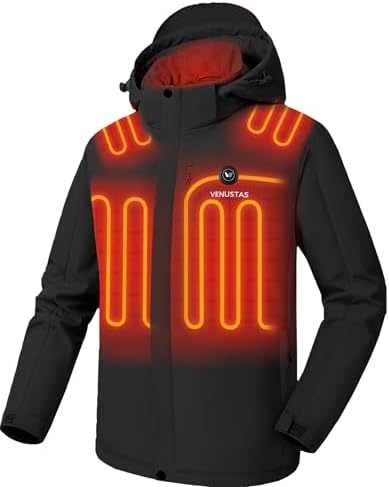
The Venustas heated jacket is worth considering if you need a combination of powered warmth and conventional insulation for cold-weather activities. Venustas heated jacket designs include carbon-fiber heating elements, adjustable heat settings, and shells designed to help resist wind or moisture. The precise specifications depend on the model, so verify the version in your supplied listing.
For outdoor workers, a suitable outer layer matters because wind can make cold conditions feel considerably more uncomfortable. A well-fitting jacket with useful insulation can complement the powered heating system.
Key Features
- Carbon-fiber heating technology: Venustas models use carbon-fiber heating elements to provide targeted warmth.
- Adjustable heat levels: Some models offer low, medium, and high settings, allowing you to adjust warmth as conditions change.
- Weather-conscious construction: Selected models feature water-repellent or wind-resistant shells; confirm the specifications for this exact jacket.
- Insulation and practical storage: Depending on the version, insulated construction and pockets can make the jacket useful for everyday outdoor wear and work-related tasks.
Best For
Outdoor workers who want a heated jacket with additional insulation and weather-conscious construction for cold, breezy conditions.
Things to Consider
- Heating zones, battery capacity, runtime, and included accessories vary by model.
- Water-repellent fabric is not necessarily waterproof enough for prolonged rain.
- Check whether the jacket’s insulation and fit allow comfortable layering without restricting movement.
- If your work requires certified protective clothing, verify the jacket’s suitability rather than relying on general outdoor-use claims.
How to Choose the Right Heated Jacket for Outdoor Work
The right heated jacket should keep you comfortable without limiting your movement or interfering with workplace safety requirements. Consider these factors before making a purchase.
1. Battery Life and Capacity
Battery performance is one of the most important factors for outdoor workers. A jacket that works well for a short commute may not provide enough warmth for a full shift.
- Check battery capacity, voltage, and the manufacturer’s runtime estimates.
- Look for runtime figures at low, medium, and high heat settings.
- Confirm whether a battery and charger are included.
- Consider carrying a compatible spare battery if your workday is longer than the expected runtime.
Remember that maximum runtime usually depends on using a lower heat setting. Cold temperatures can also affect battery performance.
2. Heating Zones and Temperature Settings
Heating zones determine where the jacket provides additional warmth. Common areas include the chest, back, shoulders, and pockets.
If you spend hours working outdoors, consider whether the heating layout suits your needs. Adjustable settings are useful because you may need less heat while moving and more when standing still.
Do not choose a jacket based on zone count alone. Heating distribution, insulation, fit, and battery performance also affect comfort.
3. Weather Resistance and Insulation
A heated jacket is not automatically suitable for rain, snow, or strong winds.
- Wind resistance: Useful for exposed job sites and cold, breezy conditions.
- Water resistance: Can help with light moisture, depending on the fabric and construction.
- Waterproofing: Important when prolonged rain is expected; verify the manufacturer’s stated protection.
- Insulation: Helps retain body heat even when the heating system is switched off.
For wet outdoor work, check whether the garment is designed for those conditions and follow its care instructions.
4. Comfort, Fit, and Mobility
Outdoor work often involves bending, lifting, climbing, reaching, and carrying equipment. A jacket should allow these movements without pulling tightly across the shoulders or restricting the arms.
Check the size chart, sleeve length, cuffs, pockets, and battery placement. If you plan to wear thermal clothing underneath, leave enough room for layering without choosing a fit that becomes cumbersome.
5. Safety Requirements
Safety should come before heating performance. A heated jacket may not be appropriate for every job site.
If you work near traffic, investigate certified high-visibility clothing. For welding, hot work, electrical hazards, or environments with combustible materials, verify the applicable protective-clothing requirements before using a battery-powered garment.
Also inspect the battery, wiring, connectors, and heating elements regularly. Stop using a jacket if you notice damaged wiring, swelling, unusual odors, or signs of overheating.
6. Washing and Maintenance
Dirt, dust, and regular outdoor use can make cleaning important. Before buying, check whether the jacket is machine washable, whether the battery must be removed, and how the manufacturer instructs you to dry the garment.
Never wash or dry a battery-powered jacket in a way that contradicts its care instructions. Proper maintenance can help preserve the garment and its electrical components.
7. Overall Value
Compare the complete package rather than the jacket’s advertised price alone. Consider the included battery, charger, spare-battery cost, replacement availability, warranty, and number of heating settings.
A less expensive jacket may be suitable for occasional outdoor use, while someone working long shifts in freezing conditions may benefit from investing in a model with a suitable battery system and better weather protection.
FAQs:
1. What is the best heated jacket for working outdoors?
The best choice depends on your job and working conditions. DEWBU and Venustas are options to investigate for general cold-weather use, while the HDFIGHTING listing is worth examining if you need a safety-oriented design. Always verify the exact model’s specifications before buying.
2. How long does a heated jacket battery last?
Runtime varies by battery capacity, heat setting, ambient temperature, and jacket model. High heat generally uses more power than low heat. Check the manufacturer’s runtime estimates for the exact model and allow for conditions that may reduce battery life.
3. Are heated jackets suitable for construction work?
Some heated jackets may be suitable for construction tasks, but suitability depends on the job’s hazards and protective-equipment requirements. Check for compatibility with hard hats, safety harnesses, high-visibility clothing, and other required equipment. Do not use a garment around flames or electrical hazards unless it is specifically suitable for those conditions.
4. Can heated jackets be washed?
Some models are designed to be washable after removing the battery and following the manufacturer’s instructions. Others may have specific hand-washing or drying requirements. Always check the care label before cleaning the jacket or its electrical components.
5. Is a heated jacket better than a regular insulated jacket?
A heated jacket provides adjustable, battery-powered warmth, while a regular insulated jacket relies on insulation and body heat. A heated model can be useful when temperatures change or you spend long periods outside, but it requires charging and battery maintenance. In either case, appropriate layers and weather protection remain important.
Conclusion:
The best heated jackets for working outdoors balance battery runtime, heating coverage, weather resistance, comfort, and workplace safety. DEWBU and Venustas are worth investigating for general outdoor use, HDFIGHTING may be relevant for safety-oriented workwear, and MOZZROZZ stands out in the supplied listing for its advertised 15-zone heating design. The first listing needs further product identification before its features can be assessed confidently.
Before choosing, verify the exact model, battery specifications, included accessories, care requirements, and any safety certifications your job requires. The right jacket should provide practical warmth while allowing you to work comfortably and safely.